Context
Located in Geneva, this apartment enjoyed plenty of natural light and generous floor space, but its layout did not fully showcase its potential. The spaces were compartmentalized, the materials dated back to the original construction, and there was a lack of cohesion between the different rooms.
The goal of this complete renovation was to modernize the apartment while preserving its bright character, create a more open flow between the living spaces, and introduce a more contemporary, soft, and timeless interior design aesthetic.
Approach & design
The design process focused on three key elements: the openness of the spaces, transparency, and the quality of the materials.
Redesigning living spaces
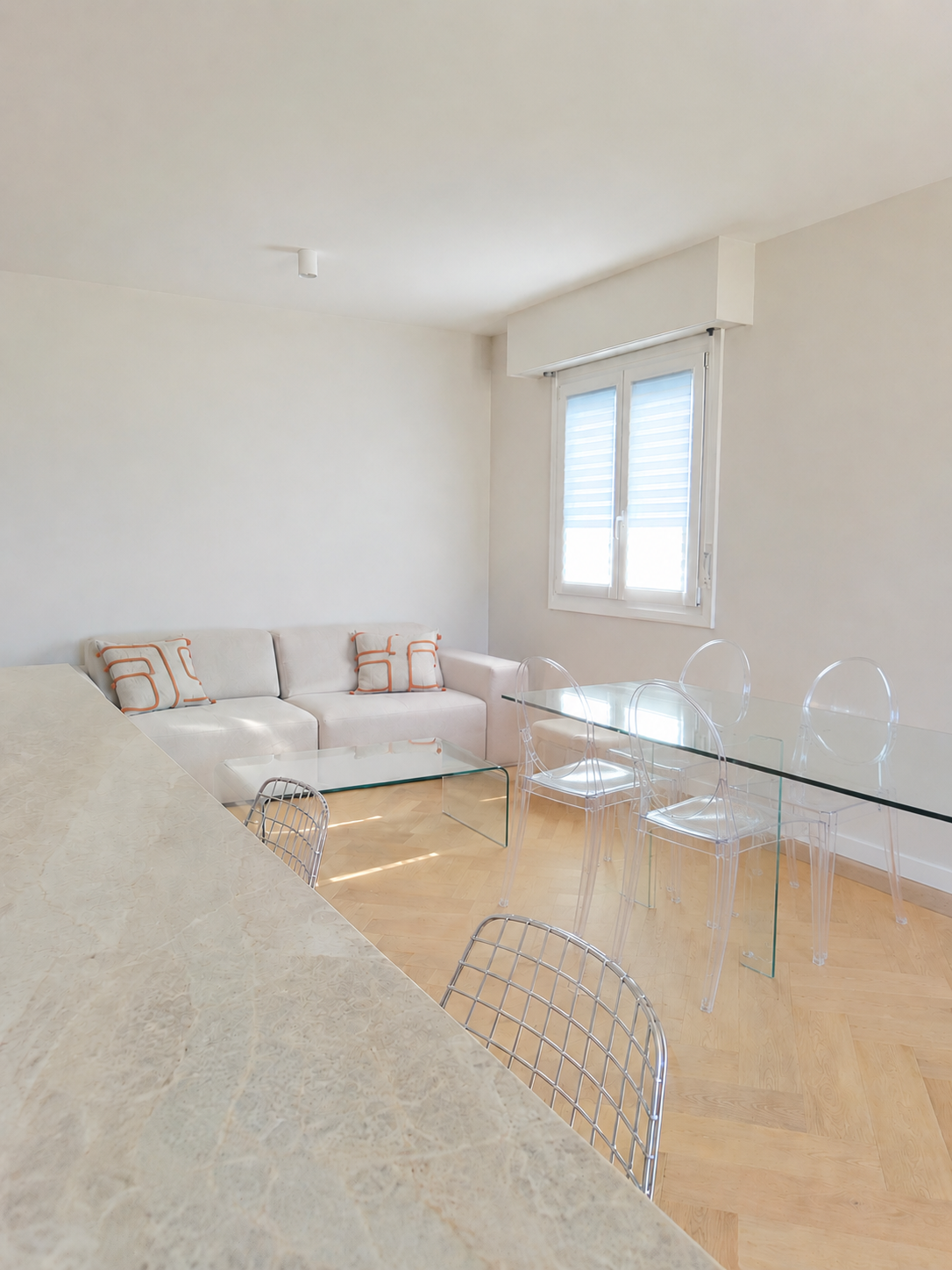
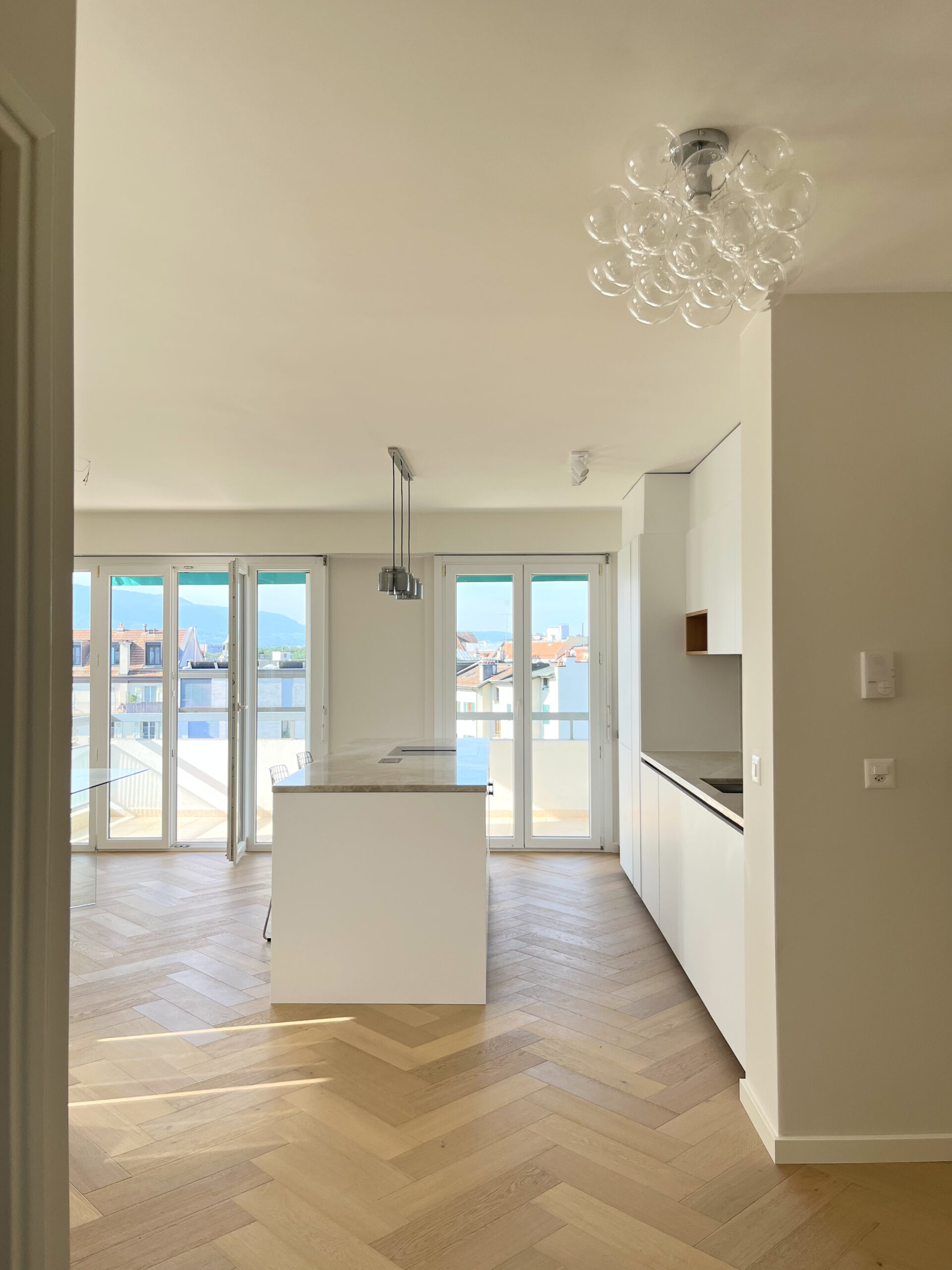
To visually expand the living area and improve traffic flow, a partition wall between the existing spaces was removed.
This initiative made it possible to:
- create a more spacious and open-concept living area;
- promote the use of natural light;
- strengthen the connection between the kitchen and the living-dining area;
- create a more open feel in the apartment.
A floor as a unifying element
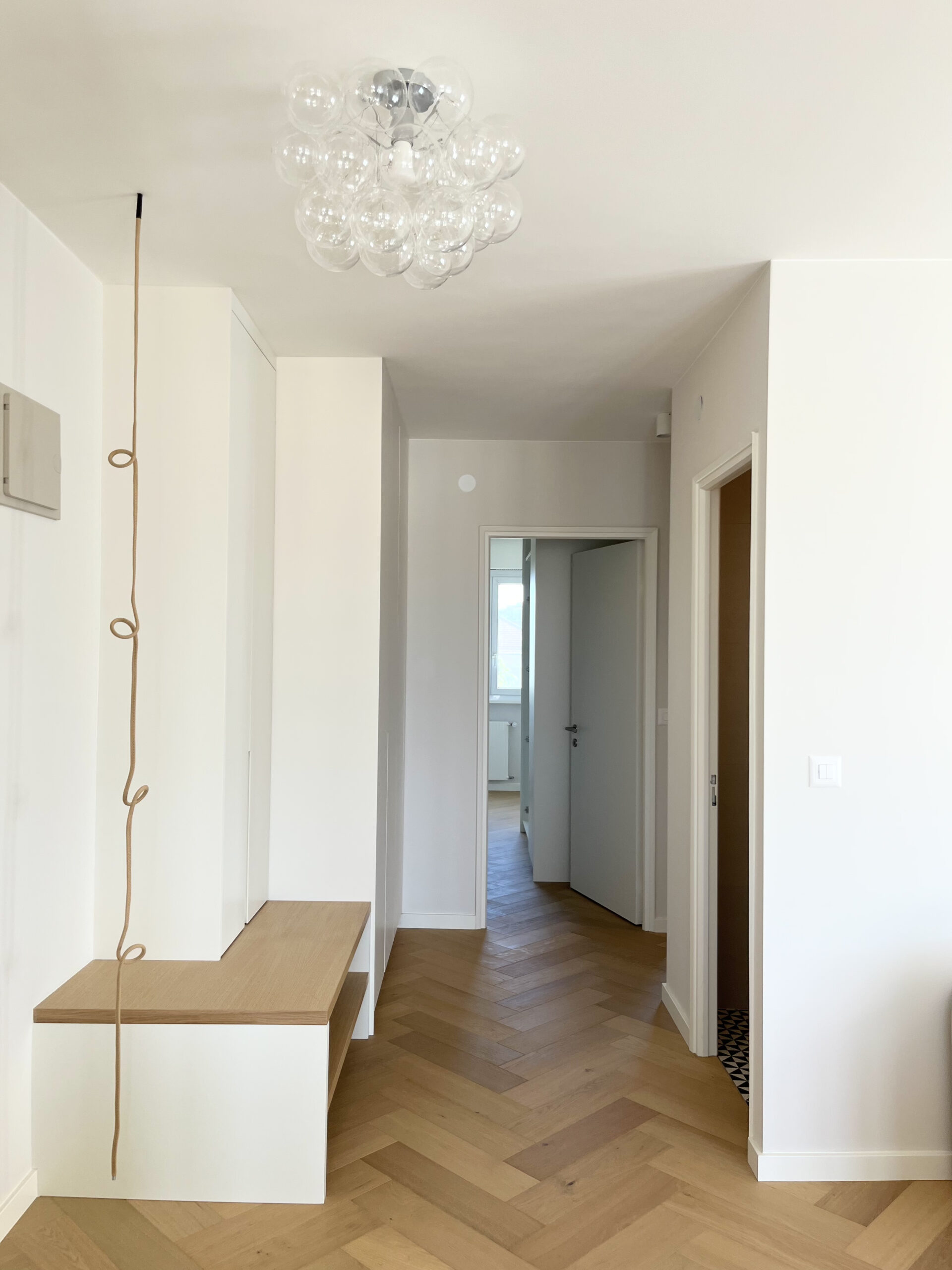
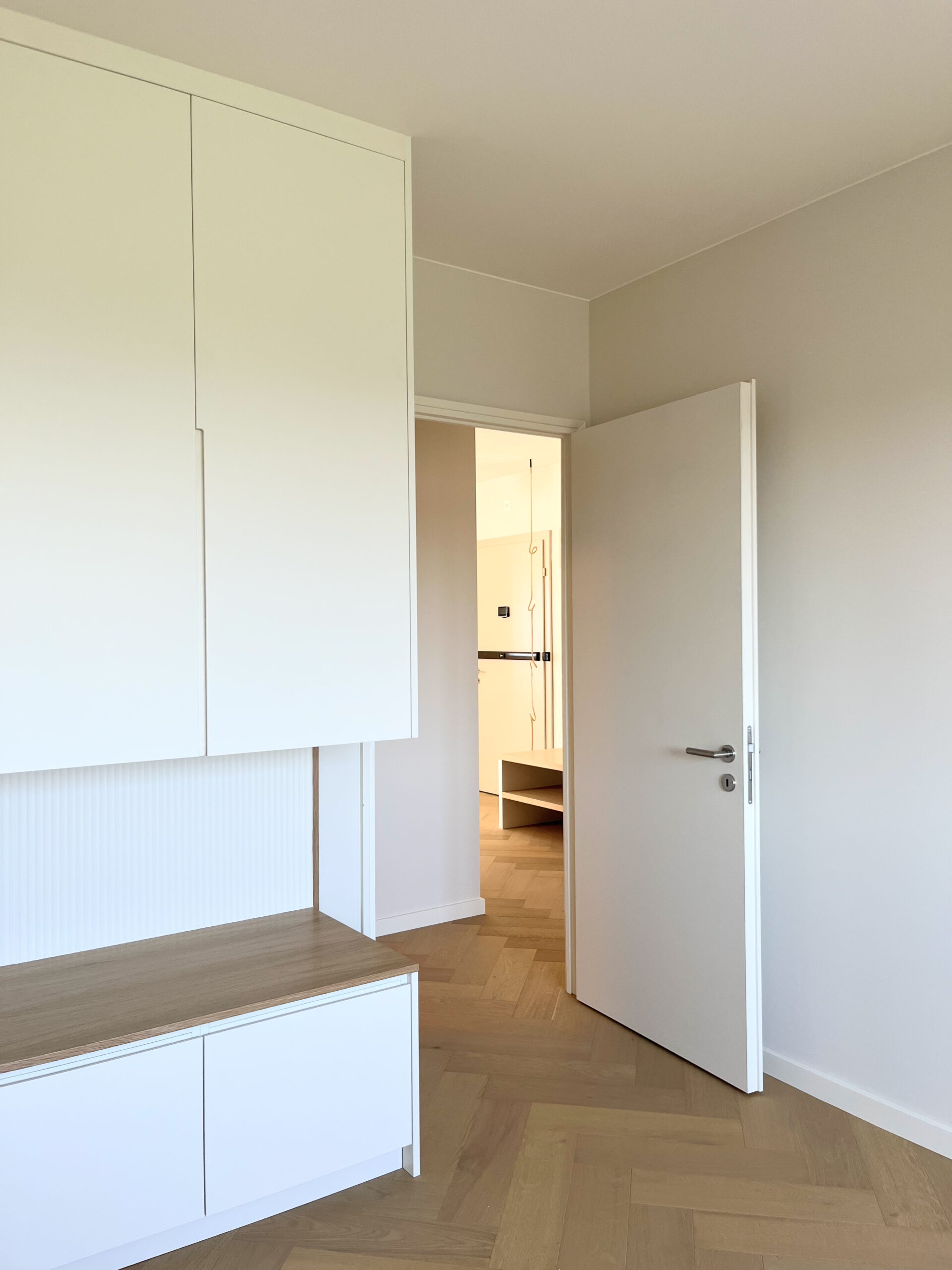
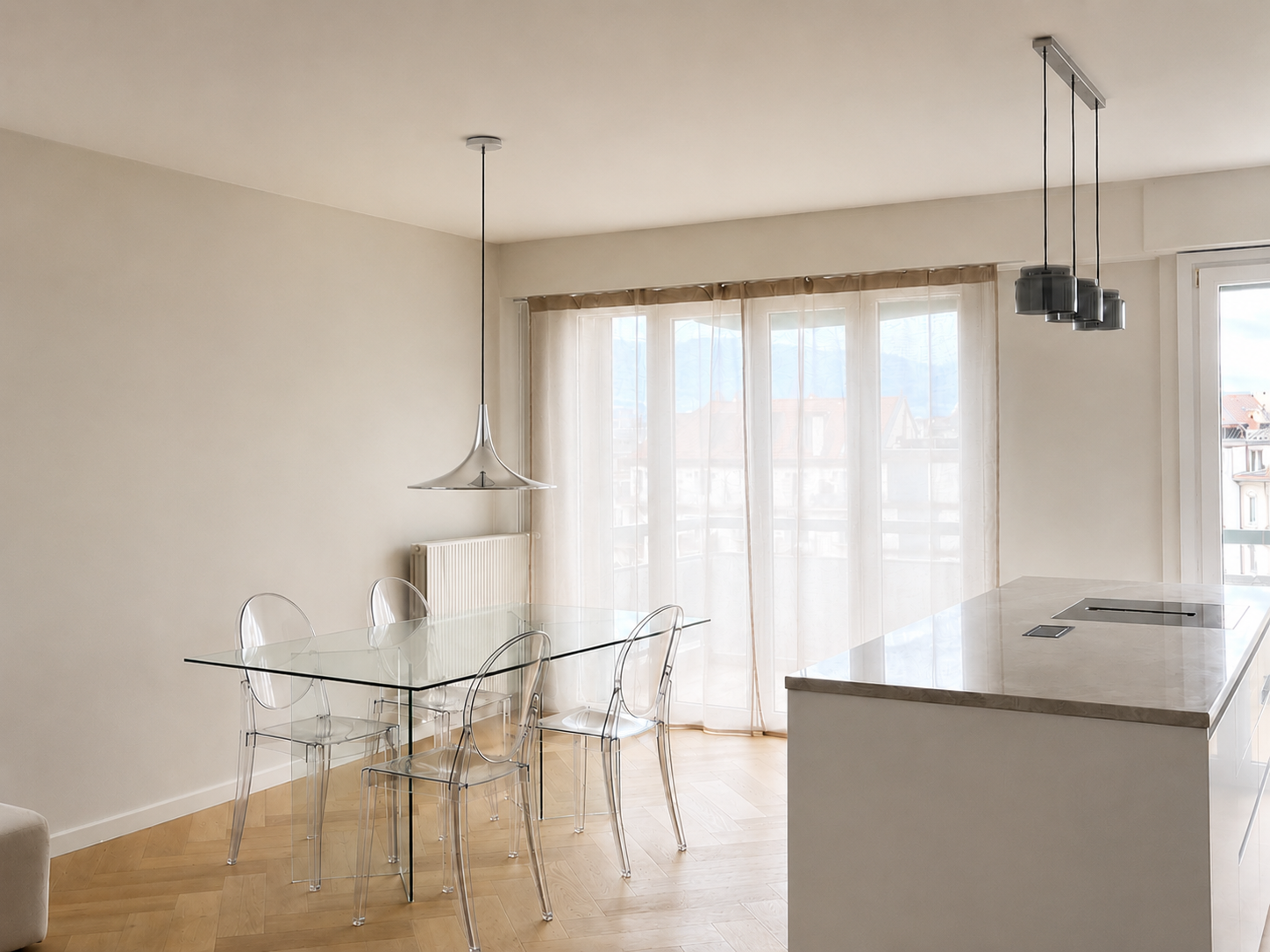
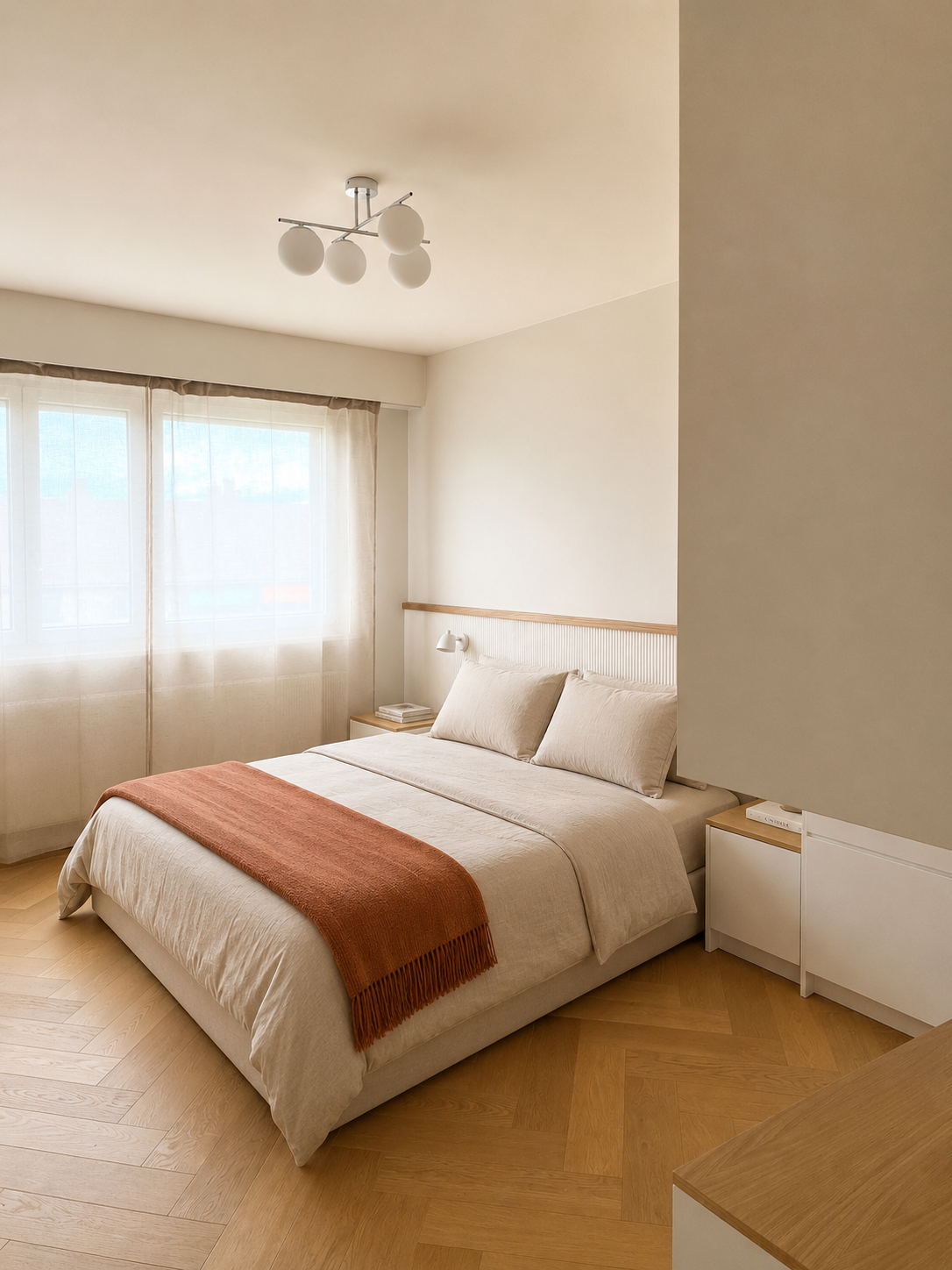
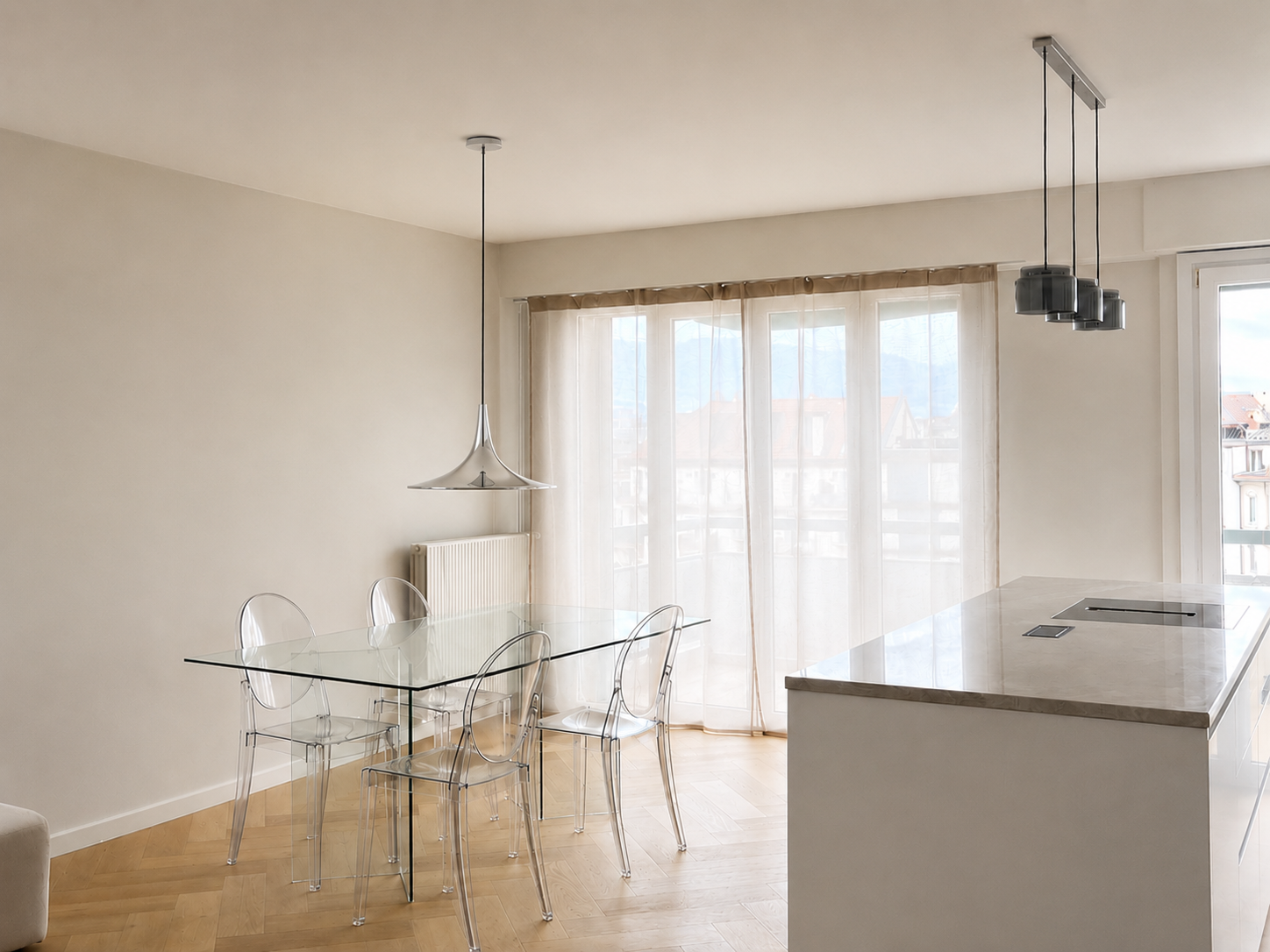
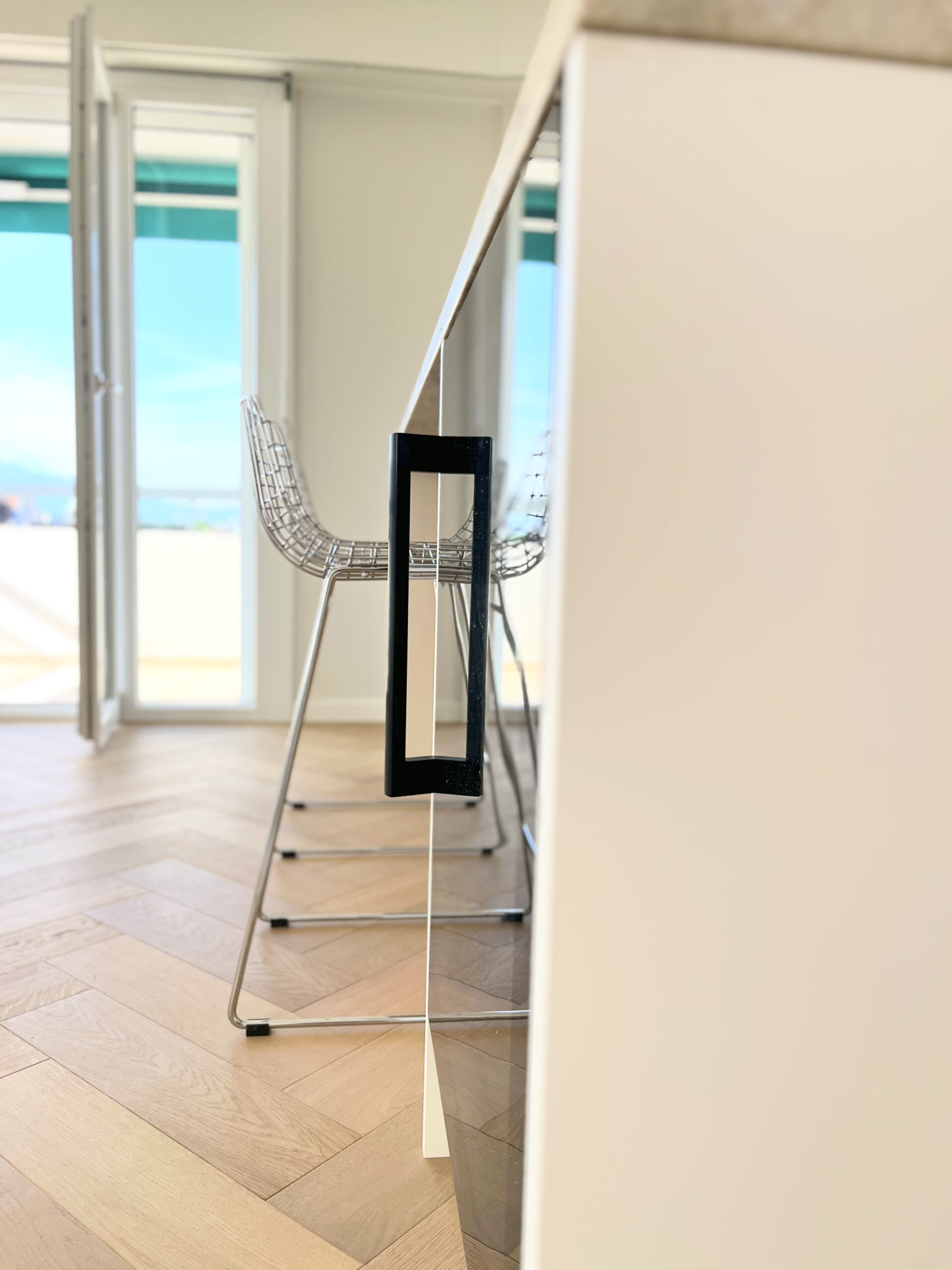
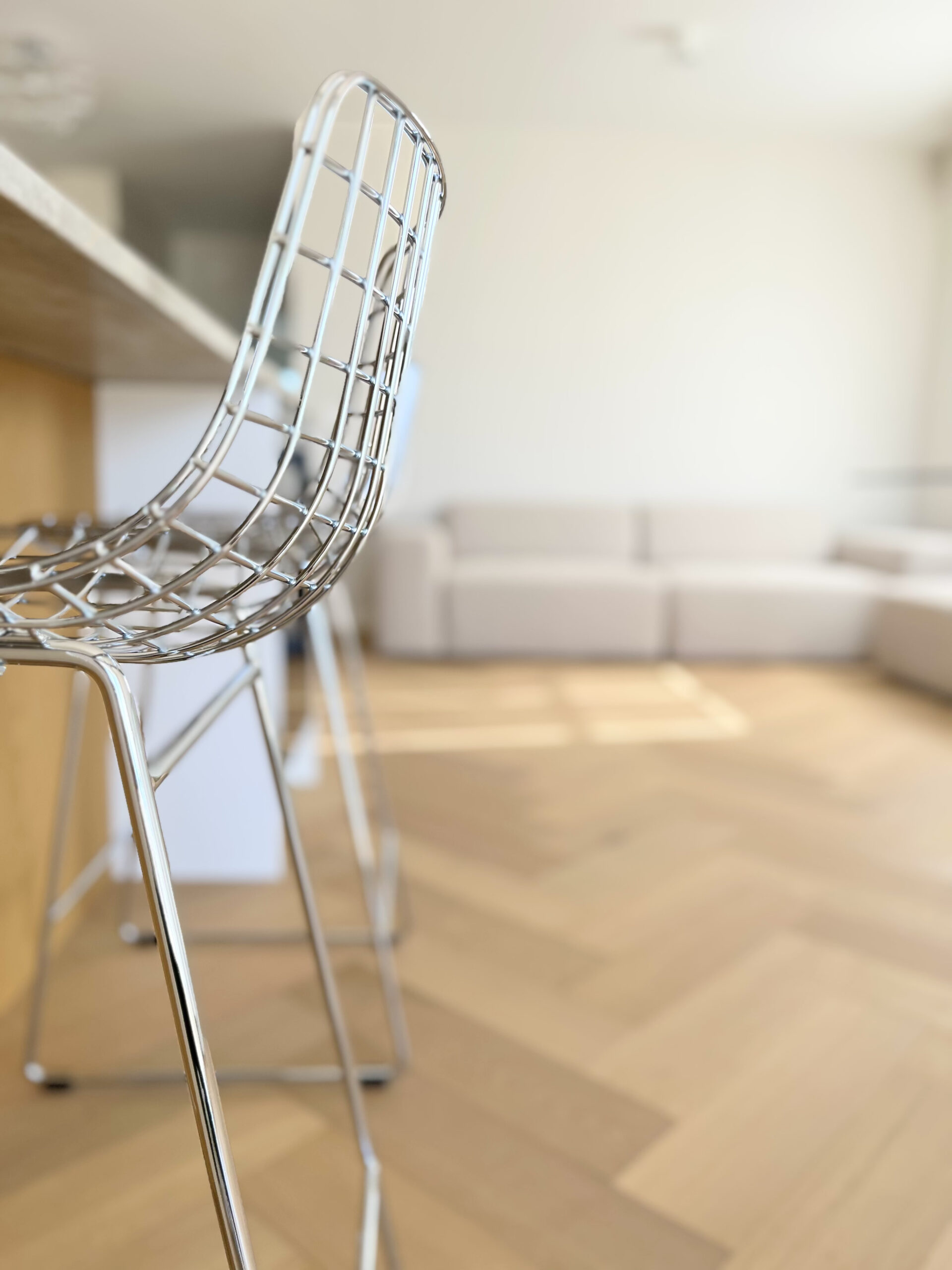
The old tile flooring was replaced with herringbone-patterned oak flooring, which serves as the backbone of the project.
This choice offers:
- more visual warmth;
- a more elegant interpretation of the volumes;
- a subtle visual rhythm that complements the perspectives;
- a sense of continuity between the different living spaces.
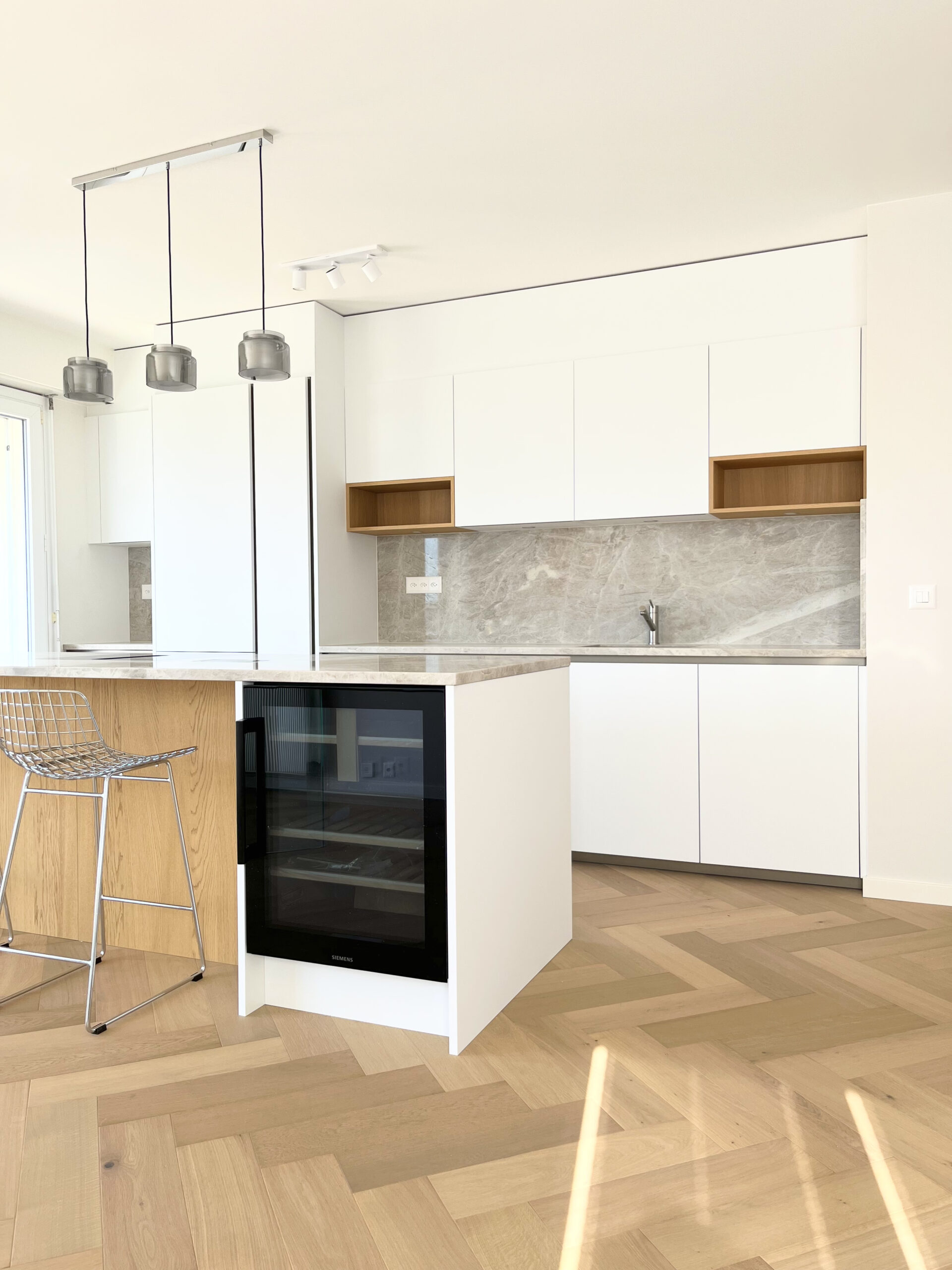
A custom-designed kitchen
The kitchen has been completely redesigned around a natural and bright color scheme.
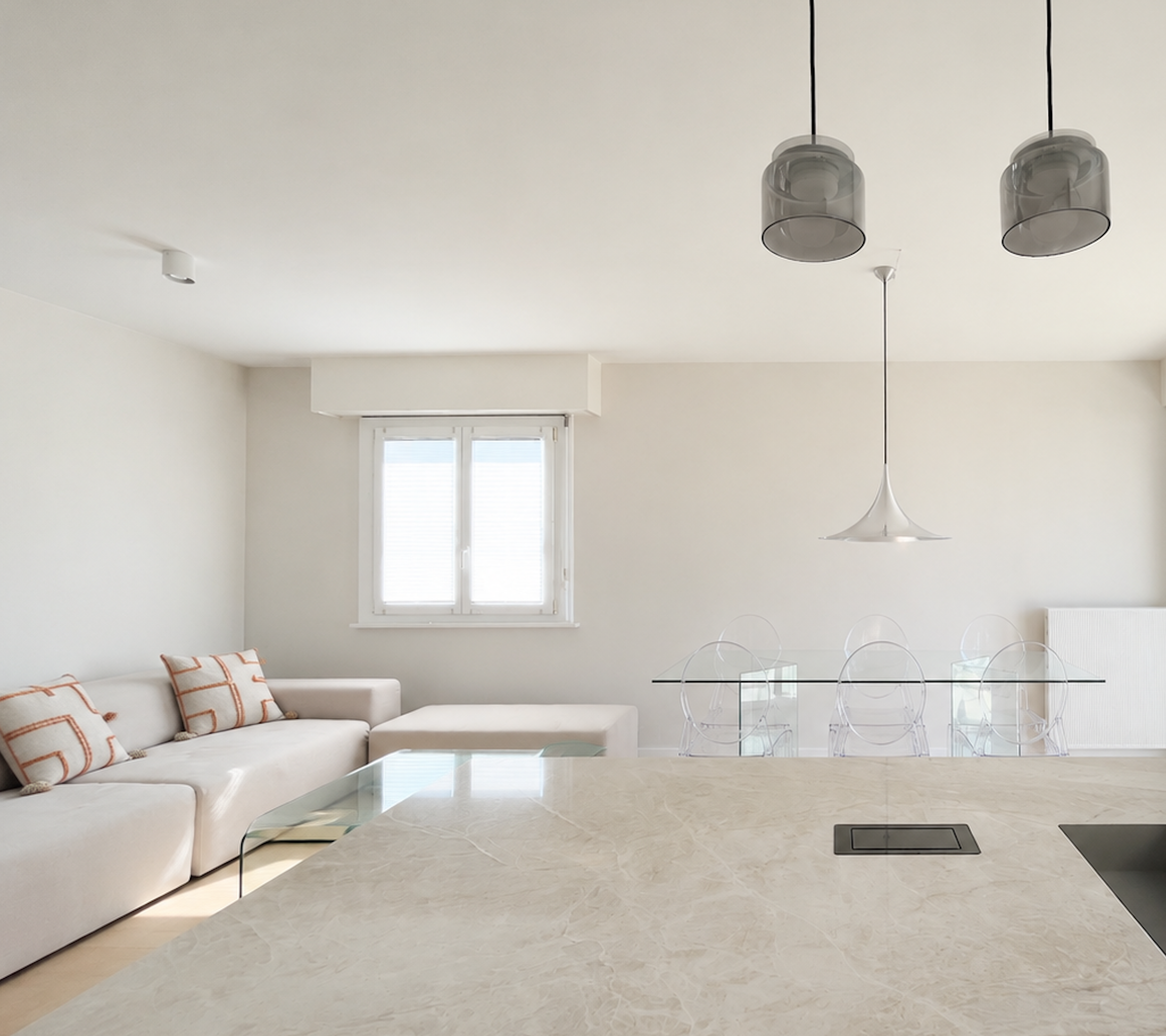
The oak furniture has been paired with a countertop and backsplash made of Taj Mahal quartzite, whose soft hues evoke the finest natural stones.
The design decisions focused on:
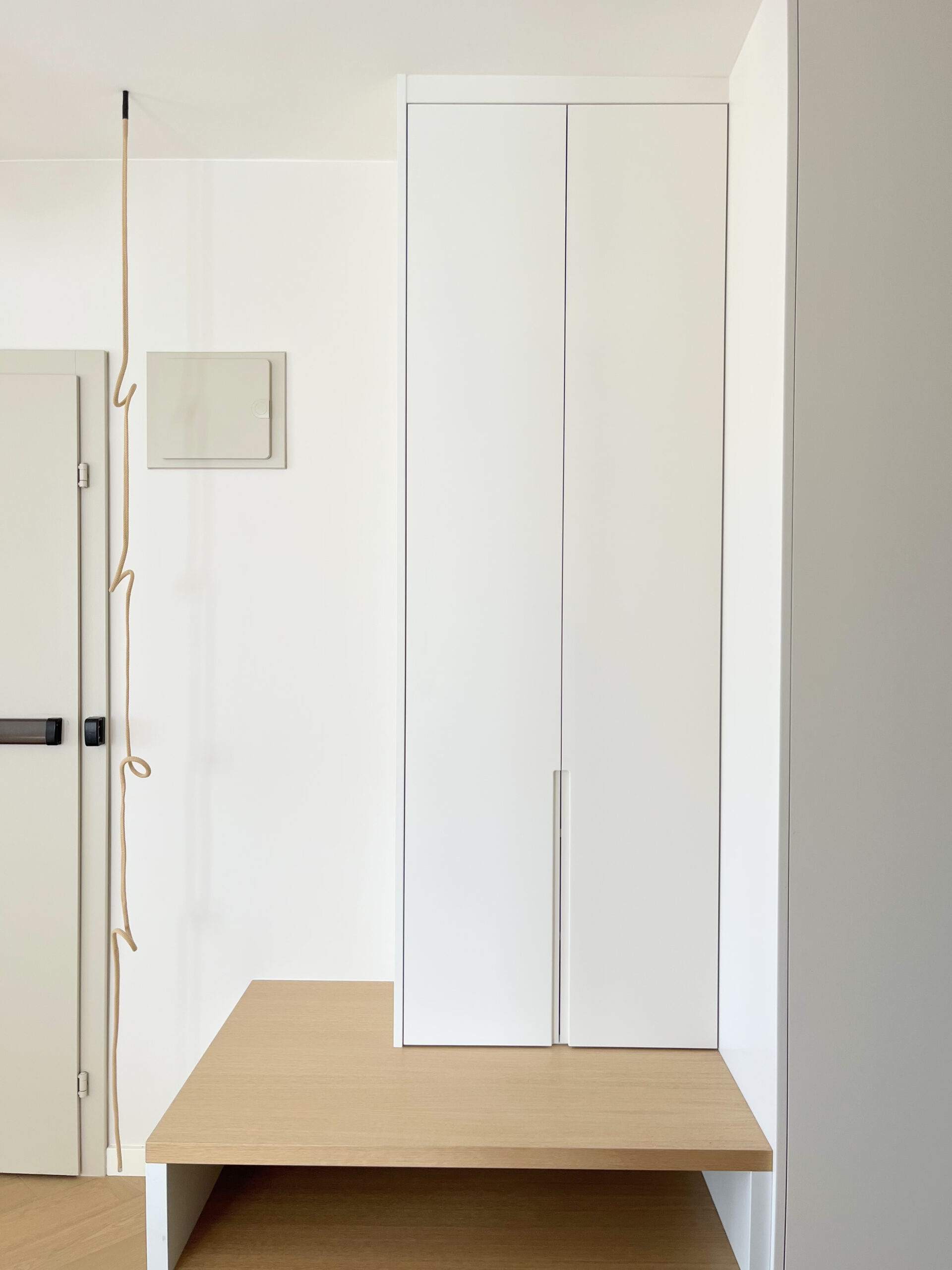
- custom built-in storage;
- clean lines without any flashy effects;
- a balanced combination of wood and stone;
- a constant pursuit of functionality and durability.
Here, the Taj Mahal serves as a unifying element among the project’s various materials, adding depth and elegance without ever weighing down the space.
Transparency and the play of light
The concept of transparency has guided much of the project.
It is expressed through:
- the glass dining table;
- the transparent Ghost chairs;
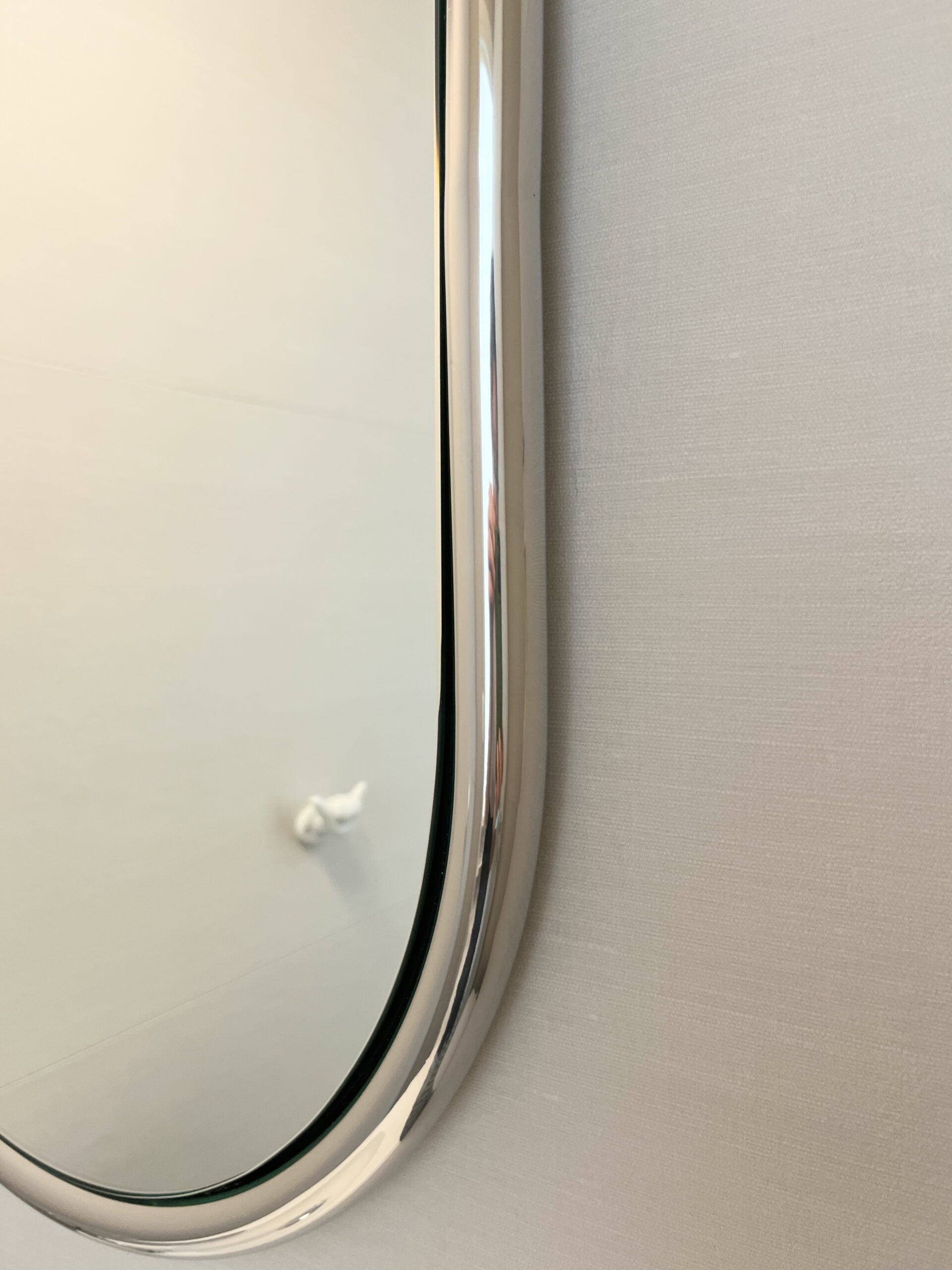
- the subtle sheen of the chrome finishes;
- light-colored surfaces that reflect natural light.
This approach helps to visually lighten the space while maintaining a sense of spaciousness and openness.
Bathrooms: A More Distinctive Look
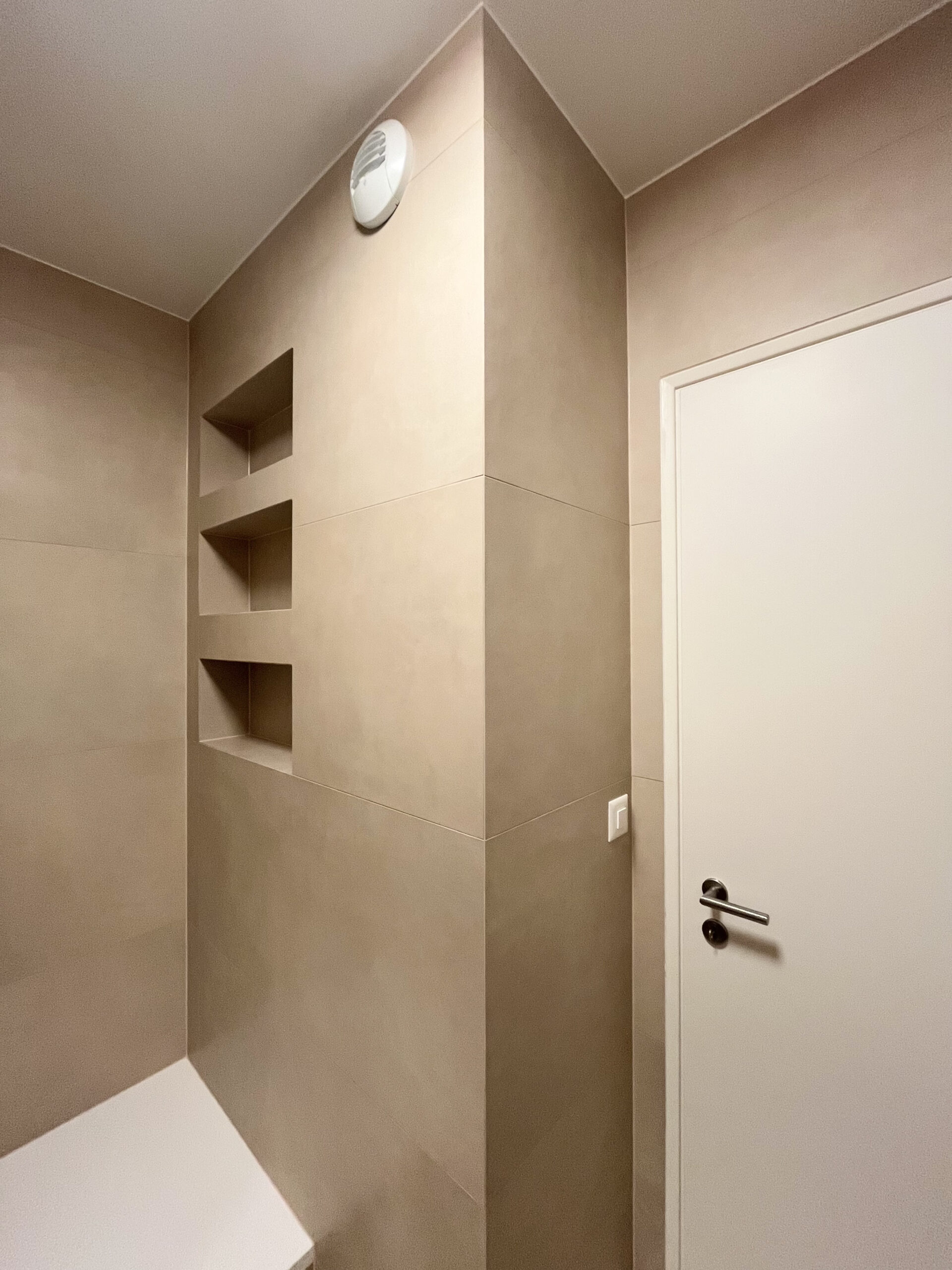
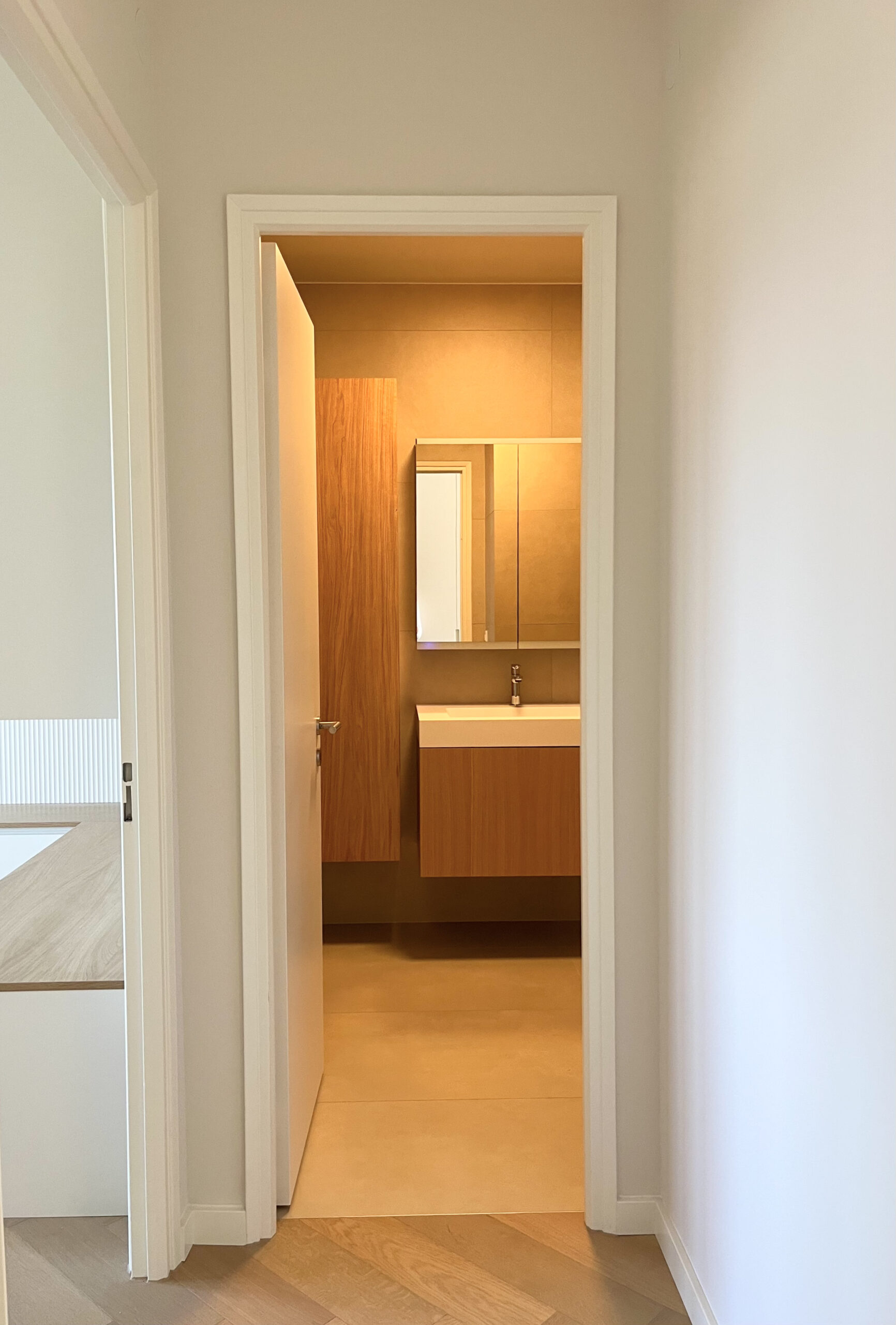
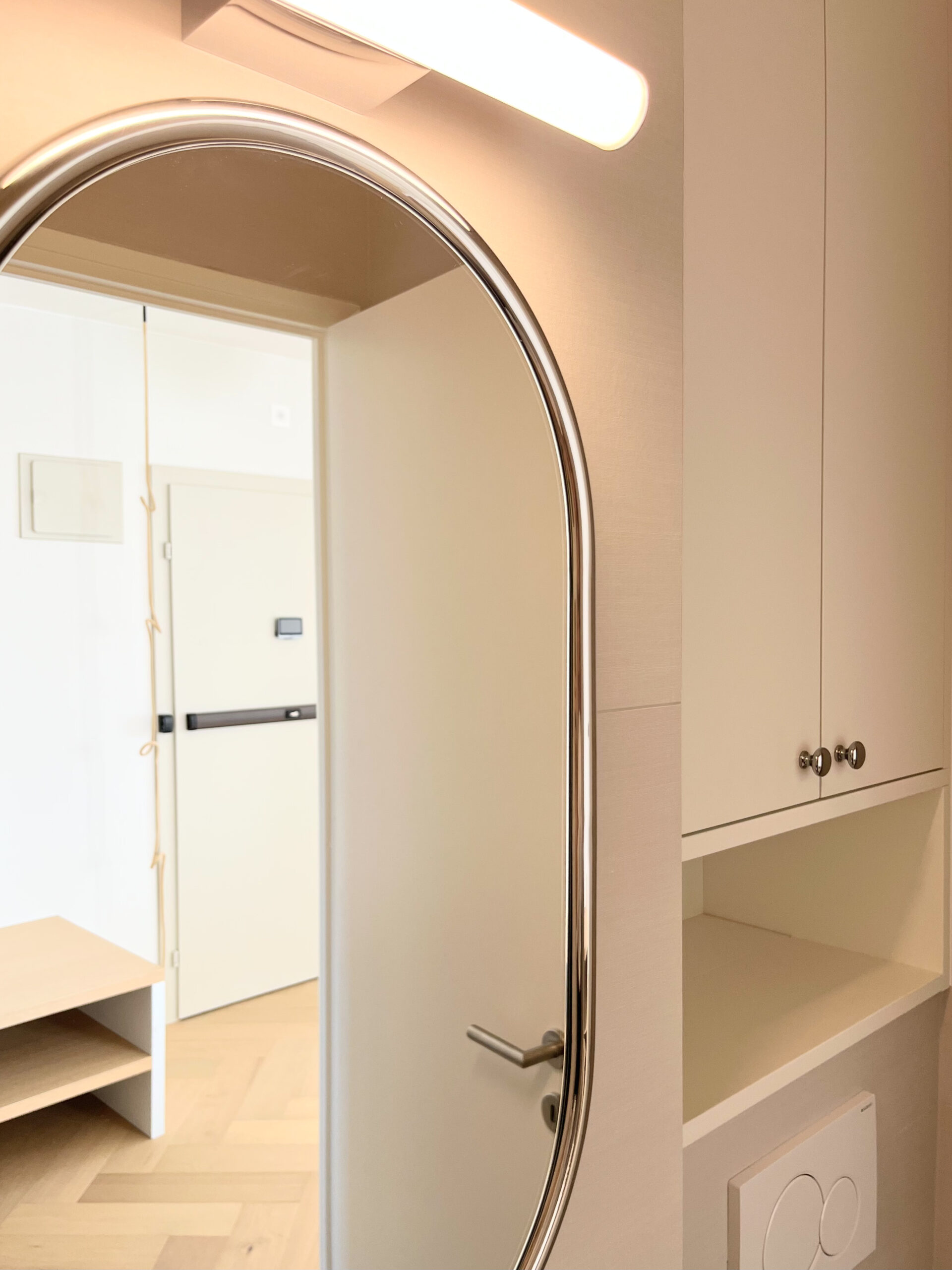
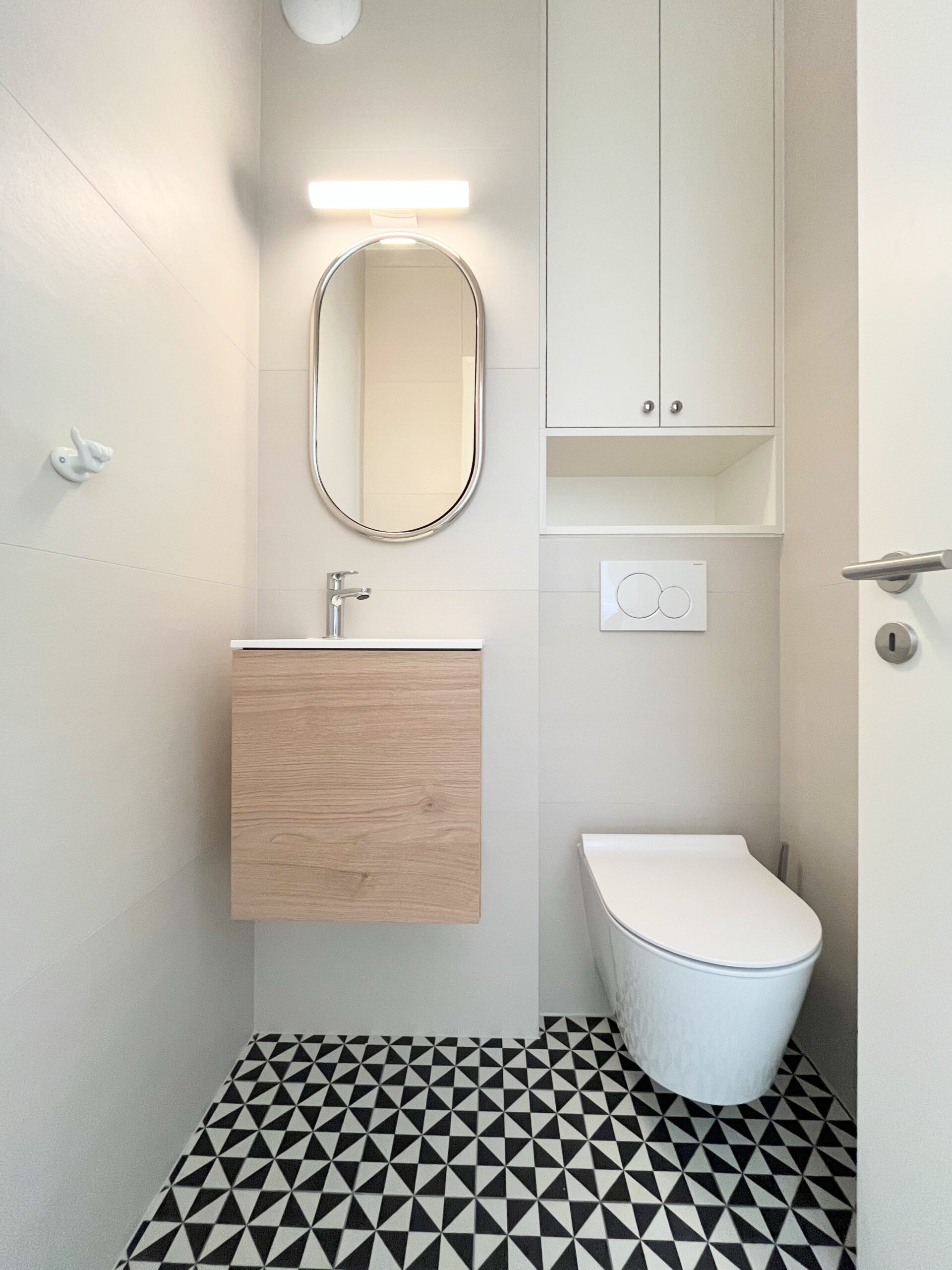
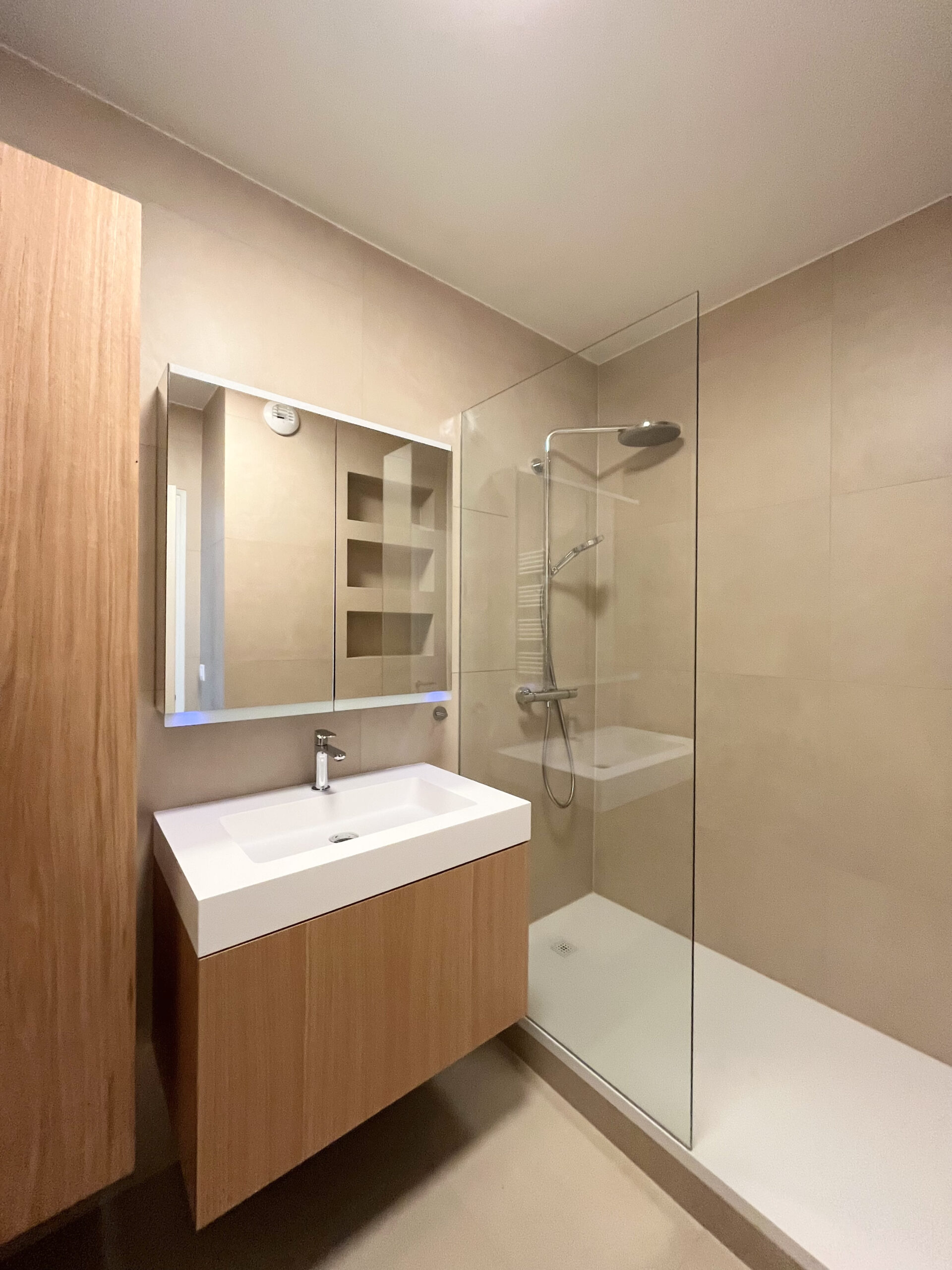
The bathrooms have been completely renovated to add more character to spaces that were previously very plain.
The guest restroom has been tiled with cotton-effect tiles, adding texture and depth while maintaining a soft, inviting look.
The bathroom, on the other hand, features bolder color combinations:
- new ceramic coatings;
- subtle contrasts;
- chrome accents;
- low-maintenance and durable materials.
The goal was to add character without compromising the project’s timelessness.
Ambiance & materials
The project is based on a deliberately soft and bright color palette:
- natural oak for warmth;
- Taj Mahal quartzite for its mineral content;
- off-whites and beiges for a soft look;
- polished chrome for light and reflections;
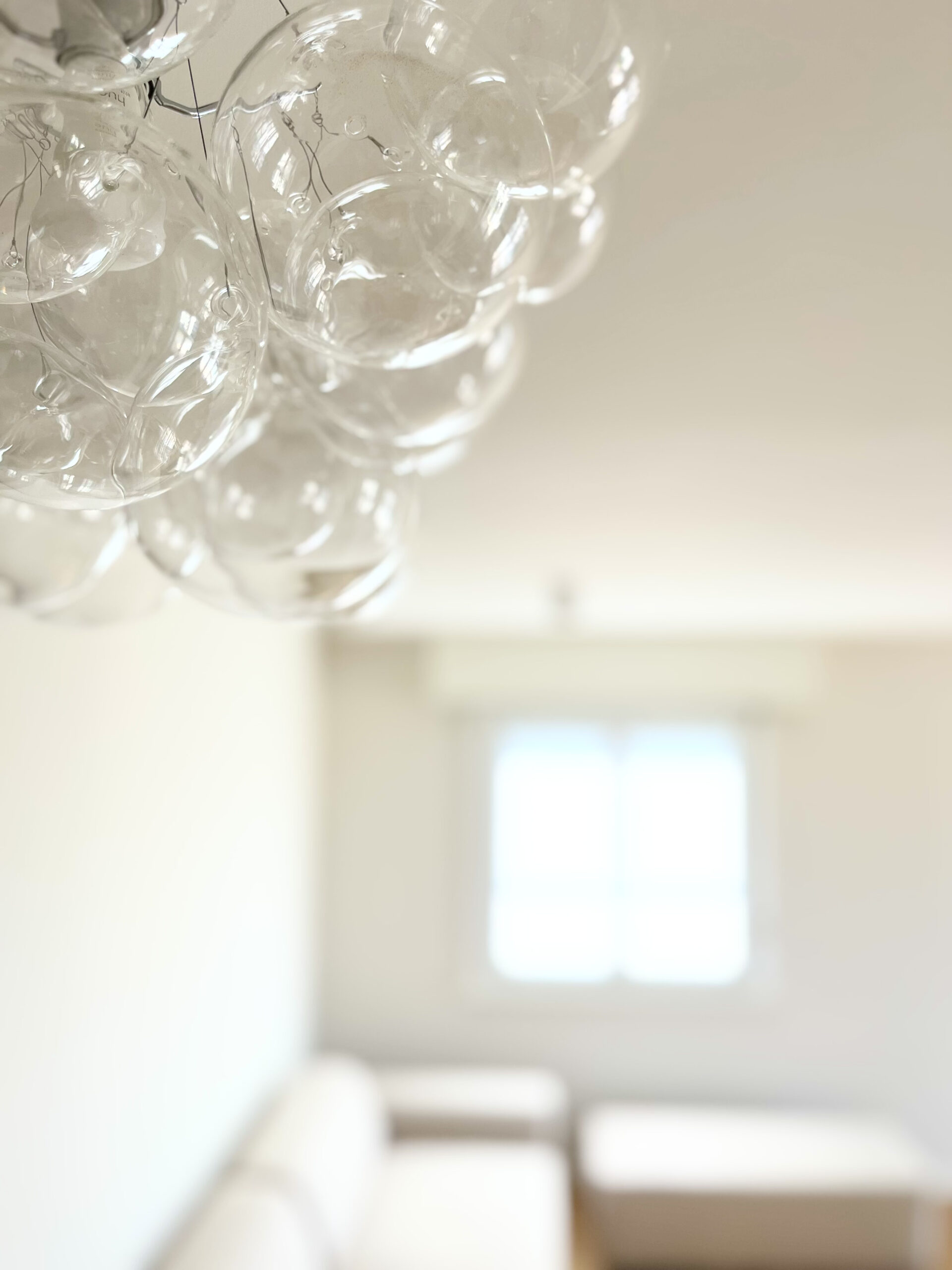
- clear glass for a light, airy look.
This combination creates a serene, elegant, and sustainable interior, where each material fits in naturally.
Results
This complete apartment renovation in Geneva shows that you don’t have to expand a home to transform it completely.
Through a comprehensive approach to volume, materials, and light:
- the living room feels more spacious;
- the kitchen is becoming a true living space;
- bathrooms take on a distinct identity;
- The materials complement each other seamlessly throughout the apartment.
The Seem project exemplifies an approach to interior design in which apparent simplicity is the result of meticulous attention to proportion, light, and detail.