Dare the hidden sparkle!

Glass blocks, an interior design treasure.

Glass blocks, an interior design treasure


Glass blocks were introduced by American architect Frank Lloyd Wright in the early 1900s. Their use spread rapidly due to their unique ability to allow light transmission while maintaining privacy. For decades, they were used primarily as structural building elements, while their decorative potential was often overlooked.

Today, glass bricks are making a comeback in the world of architectural design.

Here are a few contemporary examples:

Lightweight, elegant partitions.

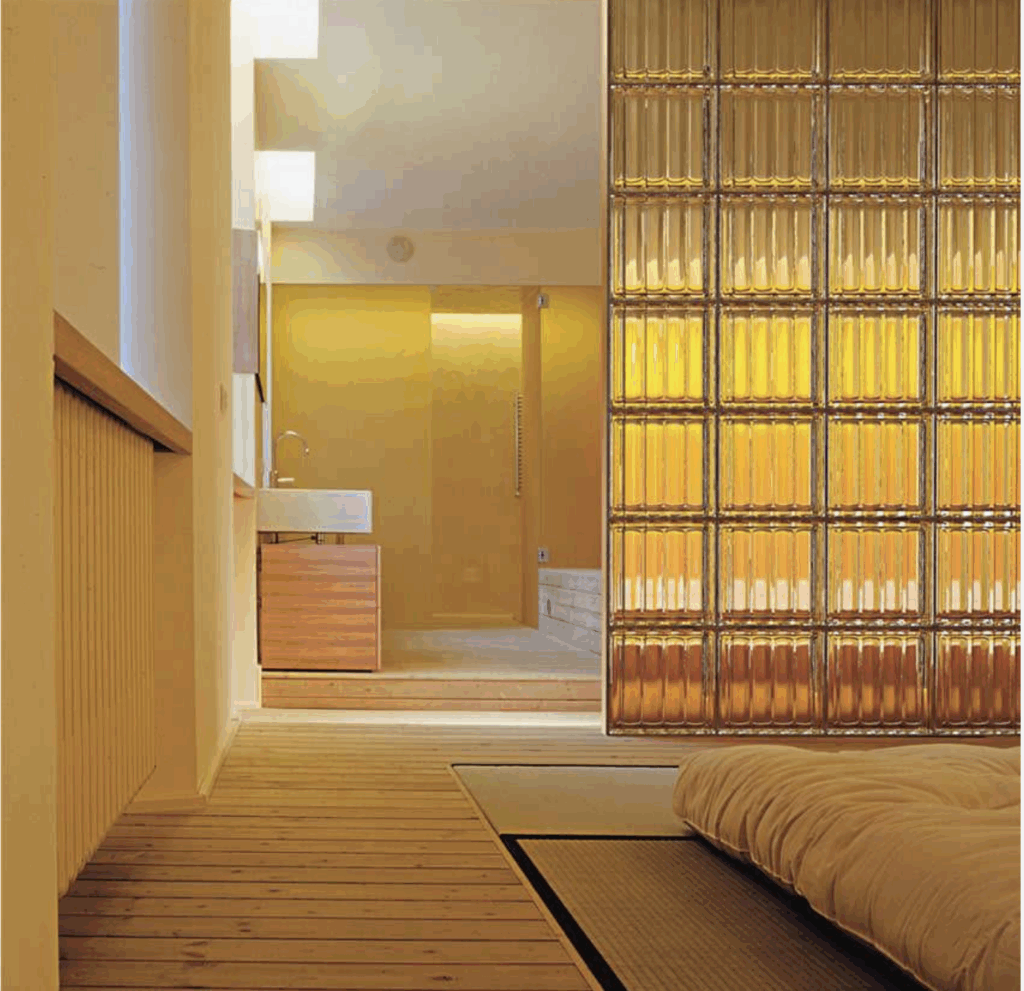
Use glass blocks as partitions to separate spaces while maintaining a feeling of openness and brightness. This creates a subtle division without compromising clarity.

It's an ideal solution for spaces where natural light is precious.

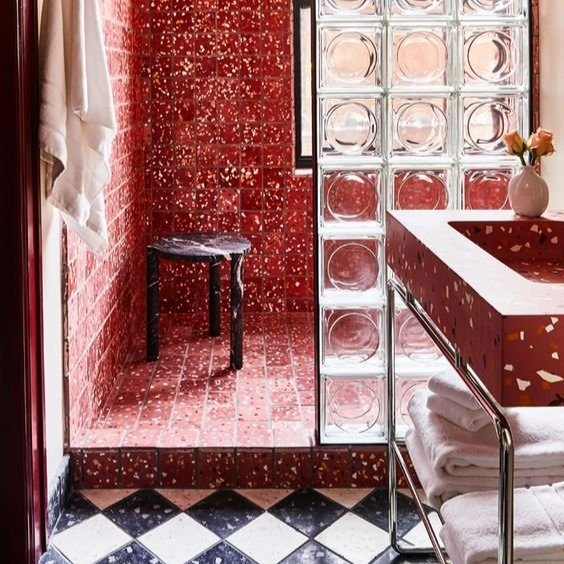
Head for Detroit, USA, with this bold design from The Siren Hotel!

Playing with colors.

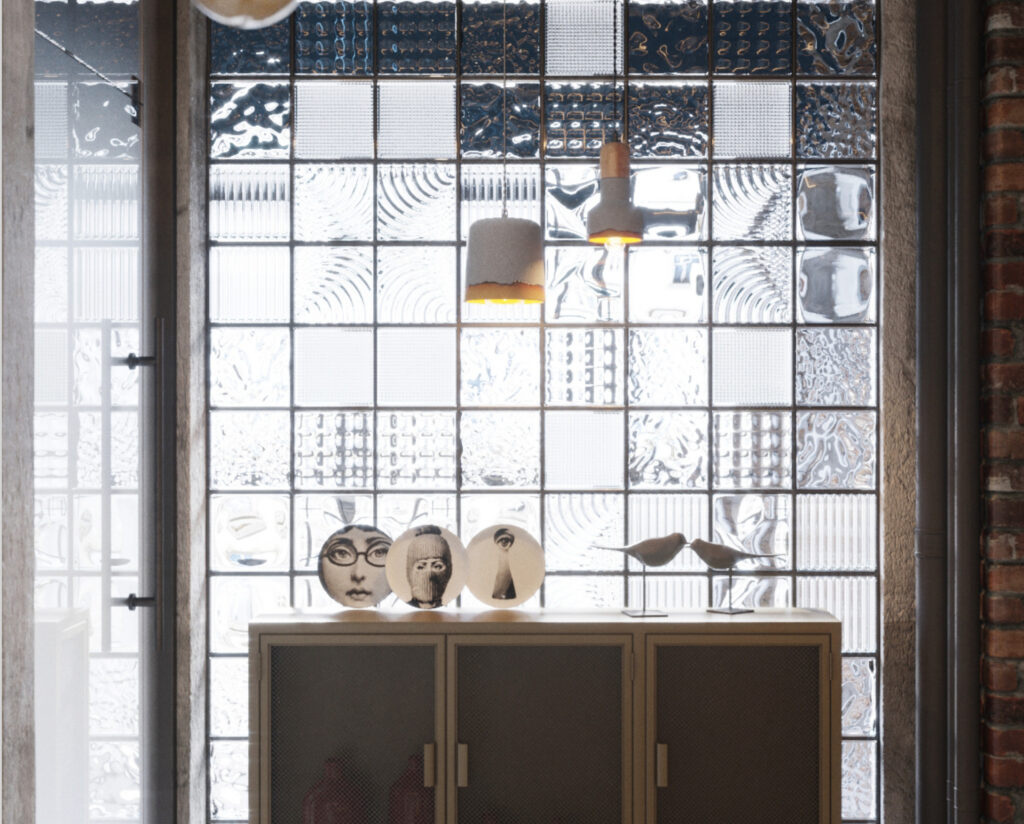
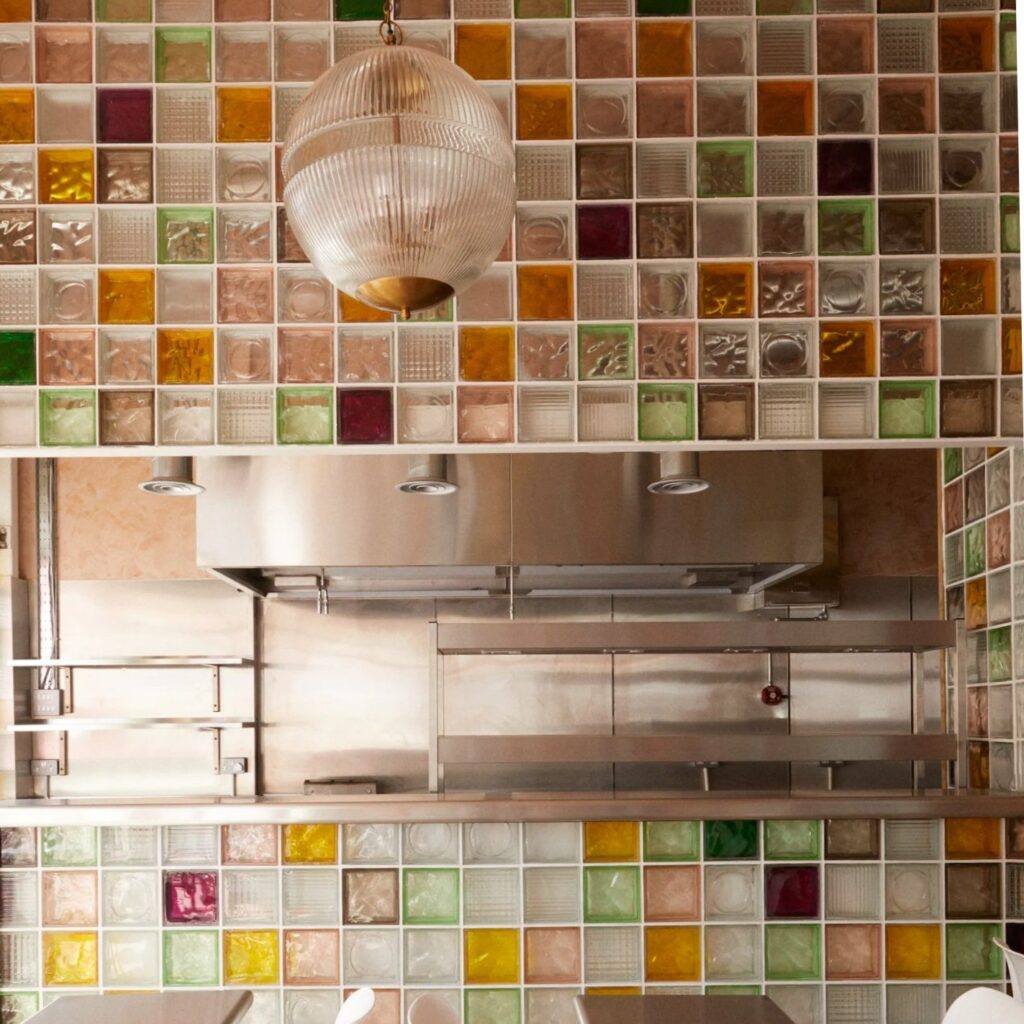
Glass bricks are available in a variety of colors and shapes. Experiment with their subtle hues or frosted patterns to create unique visual effects. This can be particularly effective in spaces where you want privacy while preserving light.

Like here in London, more precisely in Brixton, the restaurant Le Bab, created by Buchanan Studio (to be discovered!).

Illuminated wall coverings.

Transform an ordinary wall into a luminous work of art using glass bricks as wall cladding.

Play with their shapes and arrangement to create visually interesting patterns, adding an unusual dimension to any room.

An escape to the outside world

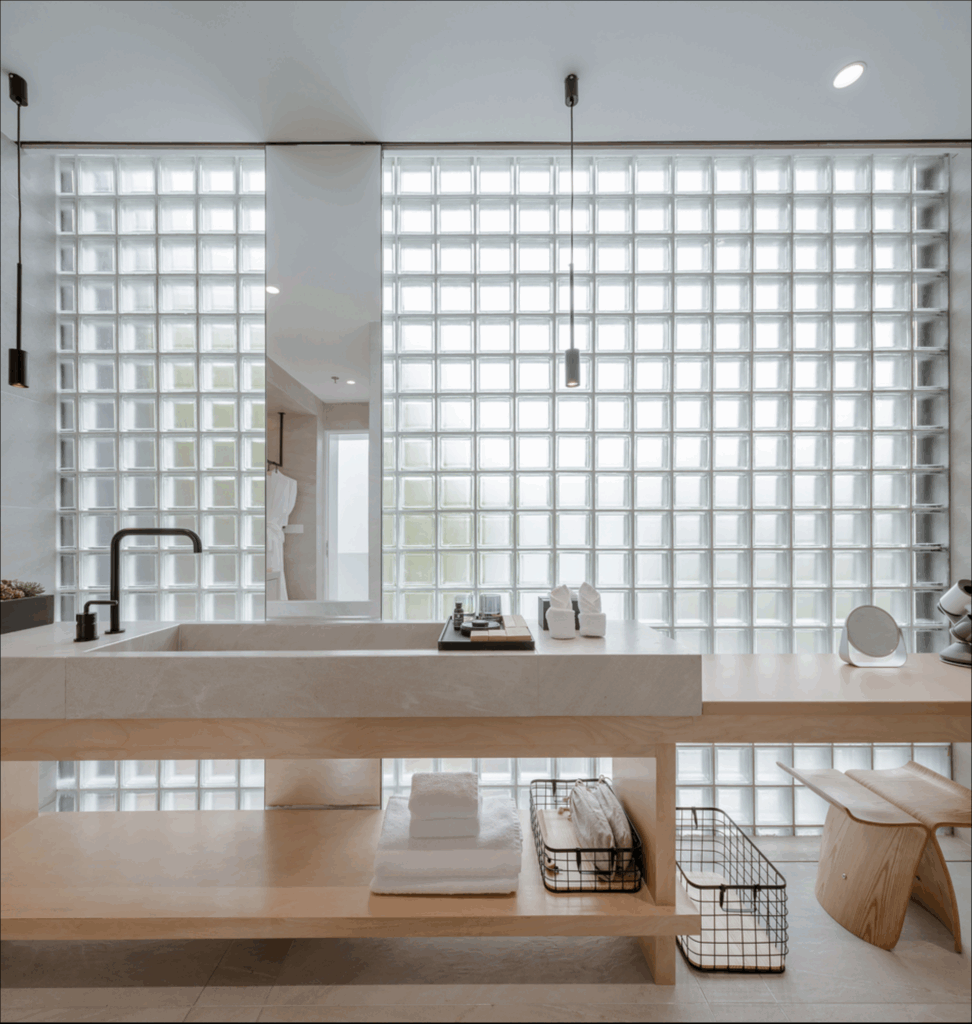
A semi-transparent glass block wall in a room can create a fusion with the outdoors without sacrificing privacy.

By using them, as here at the Cube Hotel in Huzhou, China, by SU Architect, you can enhance the interior space while making the most of daylight.

Half-brick, half-glass wall.

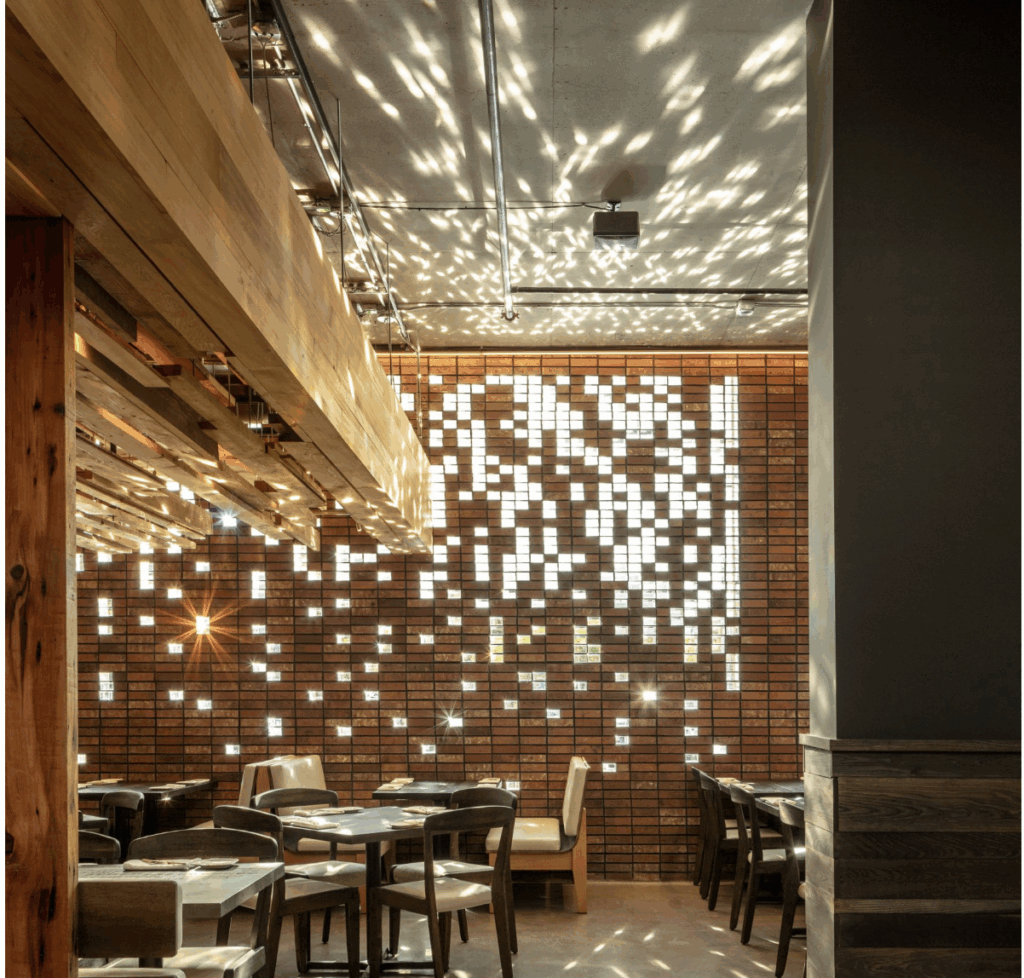
For an aesthetic that marries the classic sturdiness of traditional bricks with the modern luminosity of glass bricks, consider a mixed wall.

Alternate glass and conventional bricks to create a unique wall, offering both partial privacy and light transmission.

This technique was used by the Tres Birds studio for the design of the UCHI restaurant in Denver, USA (mouth-watering!).
Creative lighting.

Integrate light sources behind the glass bricks and create a warm atmosphere with soft, diffused lighting. Bricks are transformed into a functional decorative element!


Visit the Seven Glass Block website for inspiration and to see the multitude of variations on offer.

Glass brick, often considered a simple architectural element, can be the key to designing exceptional interior spaces.

By playing with the ability of these bricks to filter light, add texture and create unique design elements, interior designers can rediscover and reinvent this material.

rper mattis, pulvinar dapibus leo.

More decoration ideas