The real problem is not the state of the place, but its lack of direction.
When a business no longer functions as it used to, the causes are rarely purely aesthetic.
What I observe most often:
a place without a common thread,
an atmosphere that no longer suits the clientele,
chaotic traffic,
inappropriate lighting,
or a visual identity that has become diluted over time.
Result:
The place is "okay," sometimes even "nice"... but it no longer makes an impression, no longer tells a story, no longer supports sales.
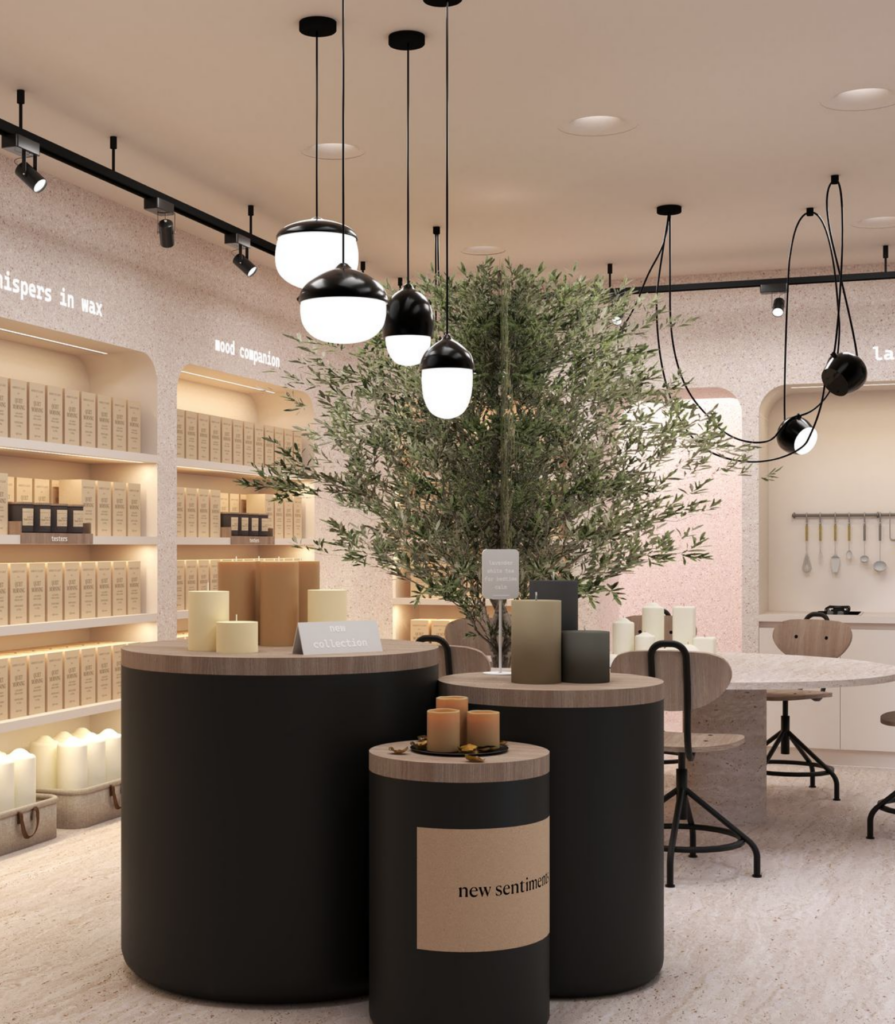
Transforming without breaking: my approach to responsive design
Rethinking a business without major changes is not the same as tinkering around.
It means carefully analyzing what already exists, identifying what still works, and taking action where the impact will be greatest.
Here are the levers I use most often.
1. Redefine a consistent color palette
Color is one of the most powerful—and cost-effective—tools available.
Changing a palette allows you to:
modernize a place,
structure the areas,
create a recognizable atmosphere,
strengthen brand identity.
2. Rethink lighting (often overlooked)
Poor lighting can ruin even the most beautiful space.
In existing stores, you will often find:
lighting that is too uniform,
too cold,
or poorly oriented.
Lighting guides the eye, creates focal points, and structures the customer journey.
3. Giving existing furniture a new voice
Frequent actions:
remove rather than add,
vary heights,
create more readable areas,
free up traffic flow.
4. Streamline circulation and the customer journey
An effective business is a transparent business.
The customer must instinctively understand:
where to enter,
where to watch,
where to stop,
where to pay.
When the path is unclear, selling becomes an effort.
5. Reaffirming the identity of the place
Over time, many businesses lose their identity:
successive additions without consistency,
decisions made in a hurry,
trends followed without an overall vision.
My job is to give the place a clear purpose again.
Not by disguising it.
But by giving it a backbone again.
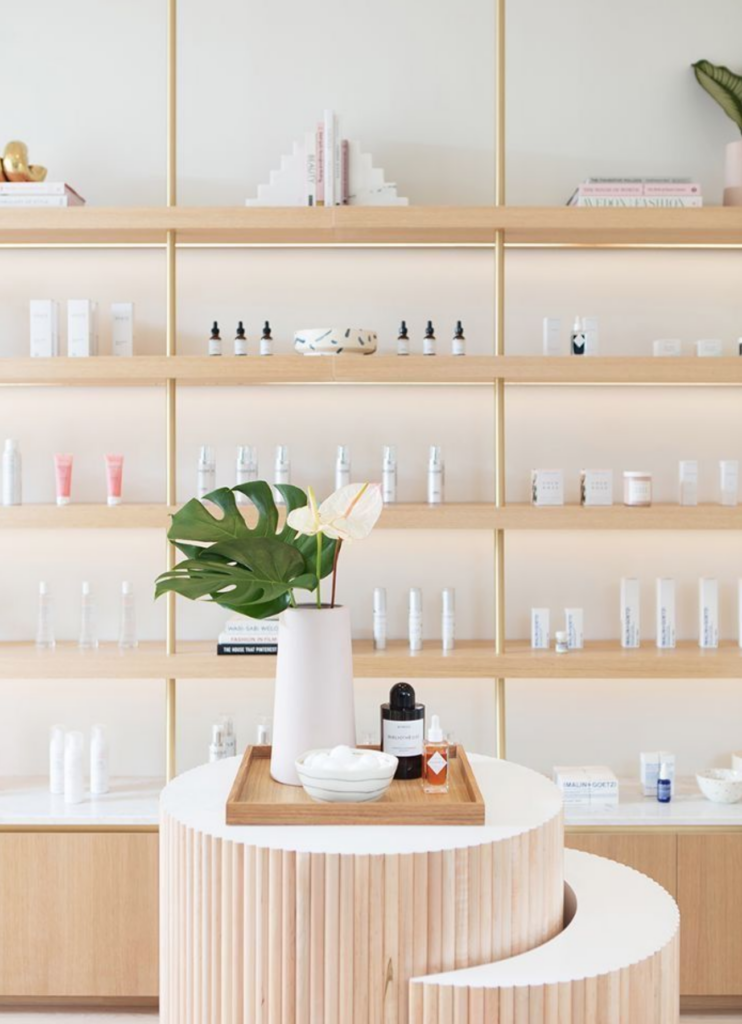
Transforming without breaking the bank: a real strategy
Rethinking a business without breaking the bank also means:
limit the closure of the premises,
control costs,
quickly improve the customer experience,
test a new direction before investing more.
It is a pragmatic, intelligent, and sustainable approach, particularly suited to freelancers.
In conclusion: sometimes, all you need to do is see things differently.
A business does not always need to be completely overhauled.
It often needs to be reviewed, reorganized, and reinterpreted.
This is where interior design comes into its own:
👉 transforming what already exists, revealing potential, restoring meaning—without waste or unnecessary effects.
📩 Do you have a business that no longer reflects who you are?
Or a place that functions "properly" but lacks a real identity?
I will help you revitalize your space with a customized, strategic, and realistic approach.