"We remain masters of the work, and the customer masters the work! of the work!
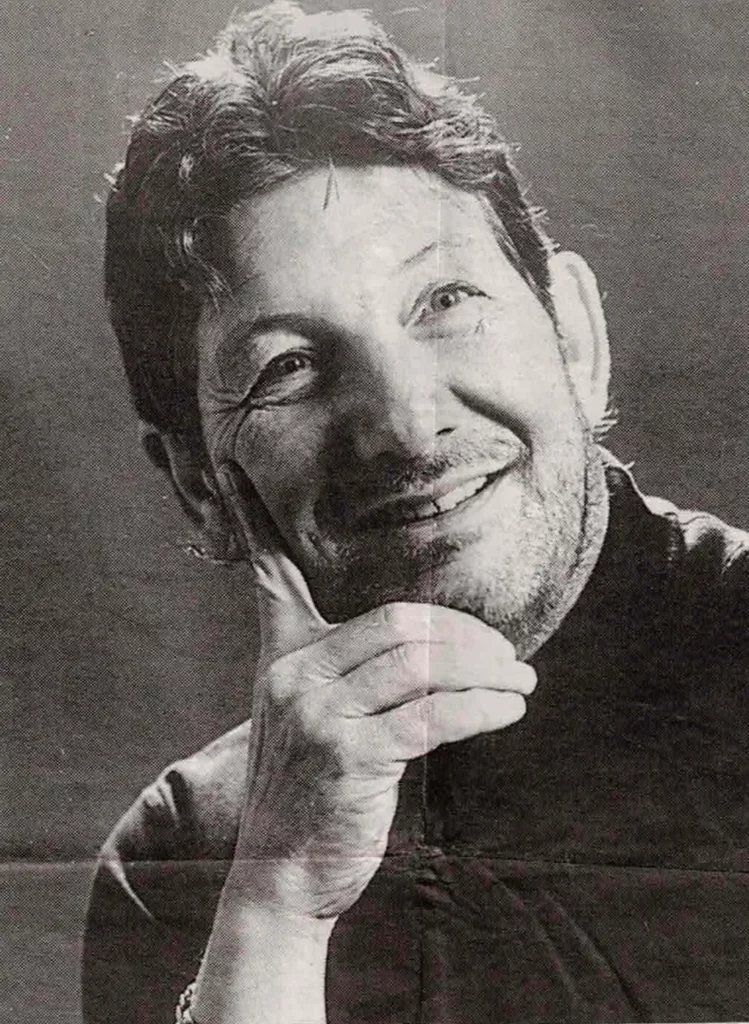
Interview with this much-appreciated man, an architect based in Nyon, Switzerland, since 1973, with more than 300 cases to his credit, including appraisals, and who continues to practice with passion at the age of 80 (born just 45 minutes before Johnny Hallyday, as his mom used to say).
Why architecture? In other words, what is your background?
It's quite a story!
I've been immersed in the world of construction since childhood, my father being a building contractor in Geneva. But in my early college years, influenced by an art teacher who was enthusiastic about Egypt, I wanted to become an Egyptologist or journalist.
In the summer of 1958, when I was 15, I had the opportunity to visit the Barrage de Mauvoisin in the Val de Bagnes. We went down with a blond boy to a depth of around a hundred meters, where it got colder and colder. At the bottom, it was teeming with trucks, like an underground city. From this experience came a desire to become an engineer!
So I began studying Architecture/Civil Engineering at the École technique supérieure de Genève (now HES). After the first two common years of engineering and architecture, I had to specialize in one branch or the other.
I ended up choosing architecture... I probably felt that the friends who chose civil engineering weren't my best friends!
Tell us about your first steps in the profession...
Around the age of 20, with my degree in hand, I spent 6 months studying in Florence, immersing myself in the Italian Renaissance. On my return, I started working with one of my brothers-in-law, 5 years my senior, who had a wood prefabrication business. We could build a turnkey house in four months. As it was spectacular at the time, I made a name for myself and the Geneva-based company went from strength to strength, with around 150 house projects, including some fifteen in Geneva and twenty in Vaud. This was the origin of my passion for prefabs, which has followed me somewhat throughout my career.
Some engineer and architect friends from Nyon asked me to take part in their UHT (temporary housing unit) project for Africa. I joined in by launching a 100% wooden house, foldable and easy to transport: it was built on our premises and shipped by boat!
From there, I began my career as a partner and freelancer. There were: BAU (Bureau d'Architecture et d'Urbanisme), in Nyon and Rolle, and Dorik SA, a company specializing in interior architecture and decoration, which later became BAUEX (Bureau d'Architecture, Urbanisme et Expertise).
What was your worst term of office? Which one gave you the most trouble?
There isn't necessarily one mandate that's worse than another. Sometimes it's the client's personality that can undermine the atmosphere and confidence, making it less pleasant to work under these conditions.
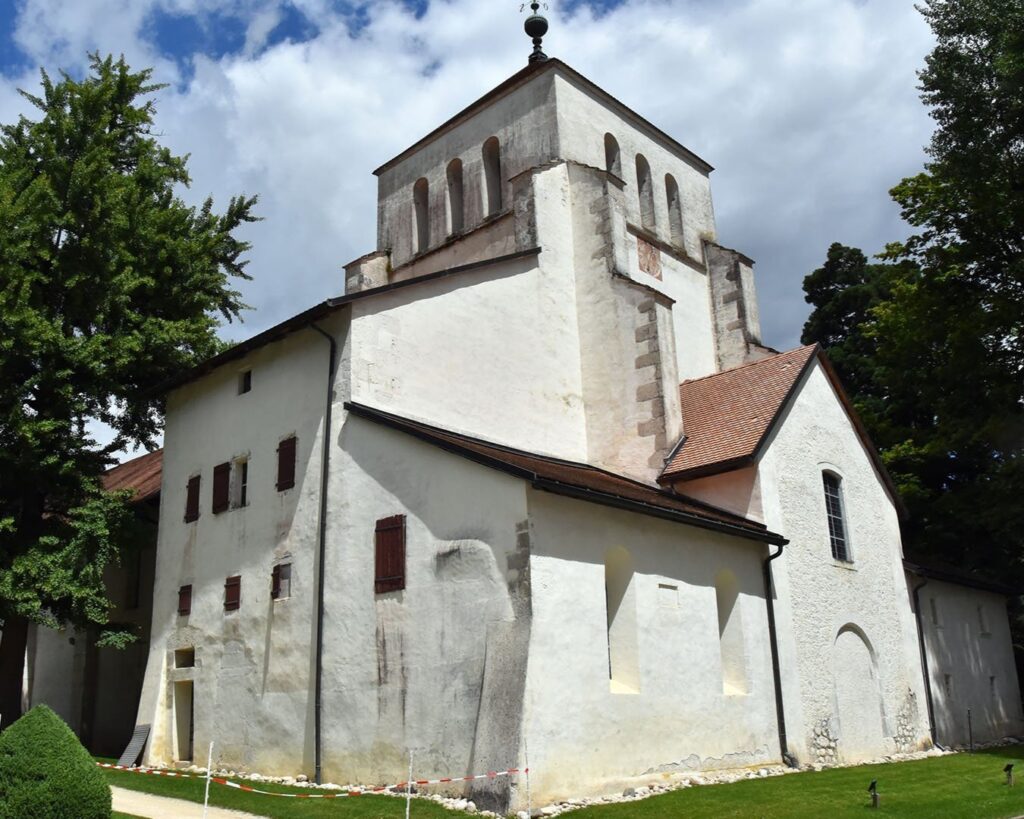
It's true that some mandates can be described as more tedious, because they require a great deal of research and knowledge. Two examples in the region: the renovation of Bonmont Abbey in Chéserex, a building dating back to 1315, and the Roman Museum in the center of Nyon.
Renovating historic monuments can quickly become complicated and slow down projects considerably. These are projects that require lengthy preparation in art history and specialized research to discover modern materials that will preserve the authenticity of the old. The realization itself is fraught with pitfalls, as there are always unexpected discoveries to be made and new expertise required. For us architects, this often translates into the impossibility of completing the project the way we want to...
What's your best memory?
Difficult to choose among 300 mandates...
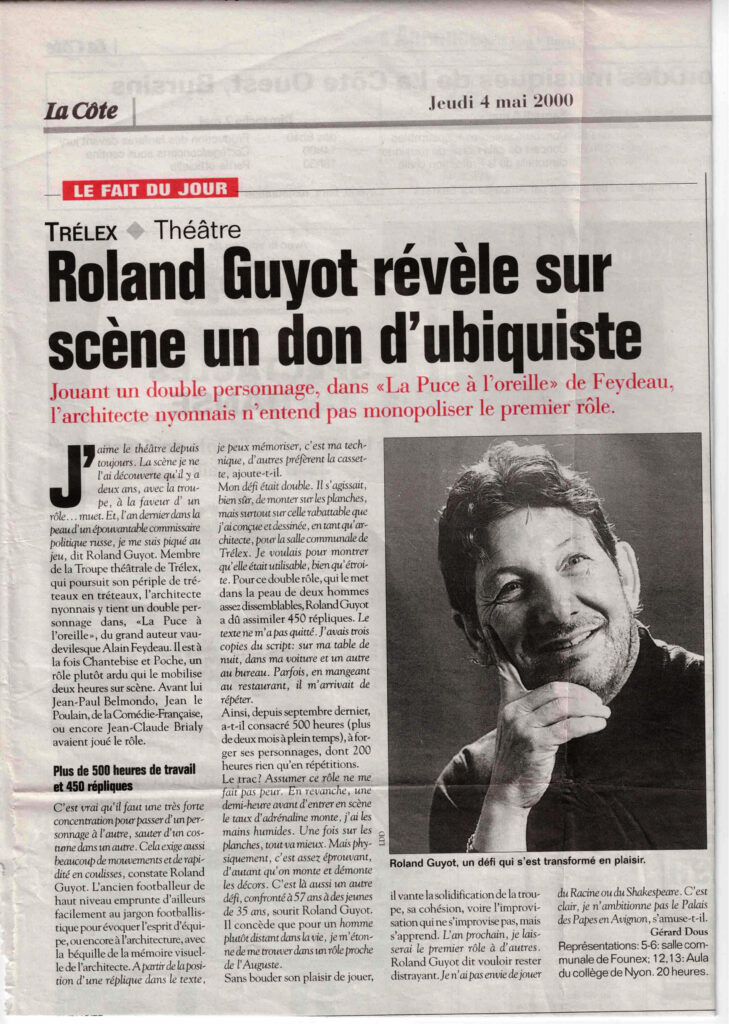
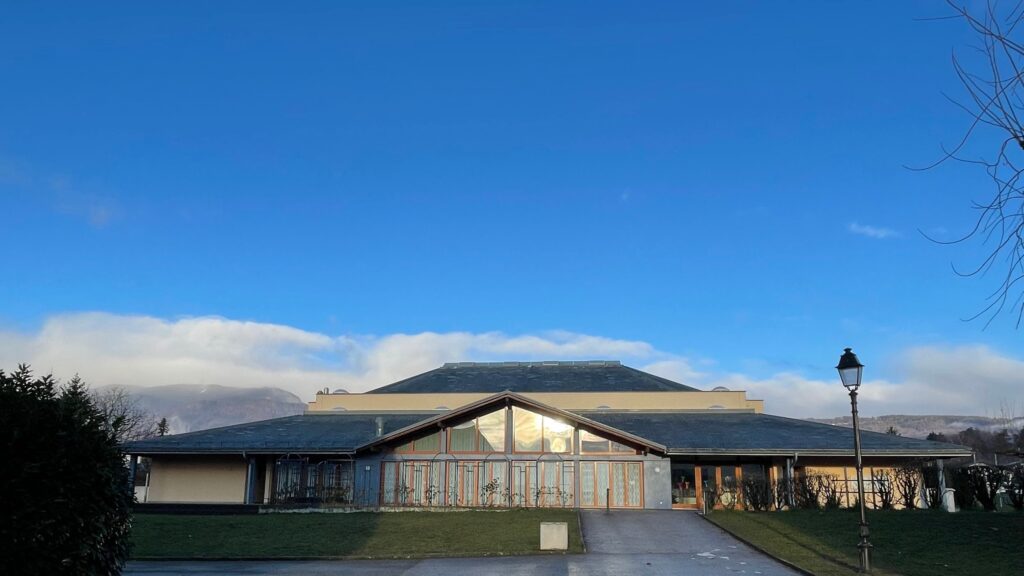
In the region, one project I really enjoyed working on was the multi-purpose hall in the commune of Trélex.
It turned out that the project that won the competition to renovate the hall was far too expensive for the commune. Having just returned from a trip to Japan, steeped in their great architects such as Andō and Kenzō Tange, I was offered the opportunity to present a budgeted project and was awarded the mandate.
So, in Trélex, I created a pagoda-shaped roof with blue eternit roofing (as is often found in Japan). It's a huge roof in the middle of a small village! Hence the choice of a discreet color, sky blue, to blend in with the sky...
Inside, the fold-down stage in a dynamic wooden structure was the talk of the town! I was challenged to perform comfortably on this stage. And since I was not to be challenged, a troupe was formed through the syndic's wife, the T.T.T. (Troupe de Théâtre de Trélex), and I performed on that stage for over 6 years!
What qualities are essential to your profession? What advice would you give to young people starting out in this field?
First, observe. Put your eye on everything and have a visual memory. You can't miss something without imprinting it on a part of your brain, keeping it in a drawer and using it as a reference.
Secondly, we all have a master. It could be, for example, Andō or Tange in Japan, Richard Neutra in the US or, back home, Le Corbusier. For me, Le Corbusier was a bit like my master, not so much in terms of lines but above all in terms of character. He had a phrase that still speaks to me: "Architecture is the correct and magnificent play of volumes assembled under light". I think that sums it up!
Here, we've only skimmed the surface of the many facets of Roland Guyot's captivating personality, too discreet to admit to having been and still being a mentor to others, but so rich in experience and stories that we never tire of listening to him. Perhaps we'll have the opportunity to go beyond architecture in a new interview!
Finally, this interview revealed much more than his architectural achievements; it portrayed a man generous with experience, whose moments shared over coffee or a glass of wine were privileges.
May her stories continue to inspire and leave a lasting imprint on our hearts.