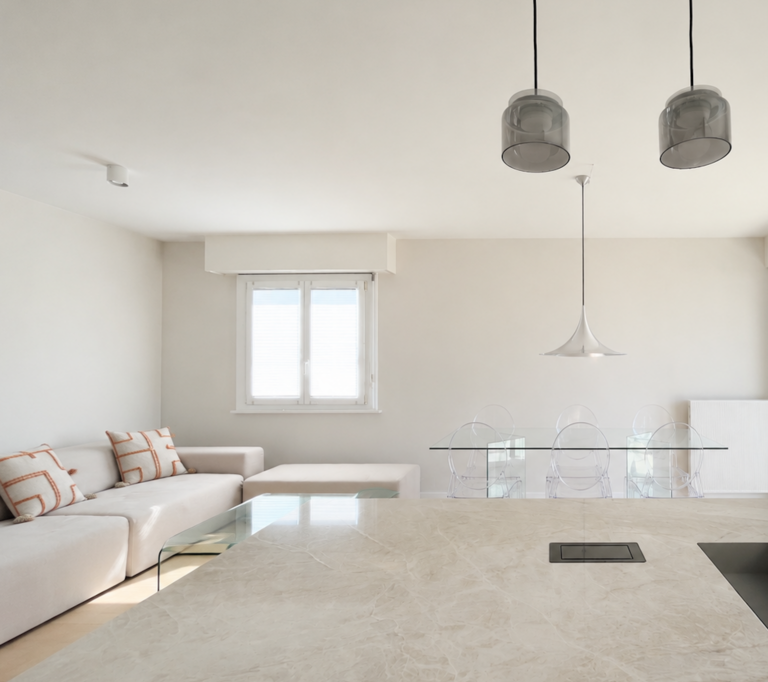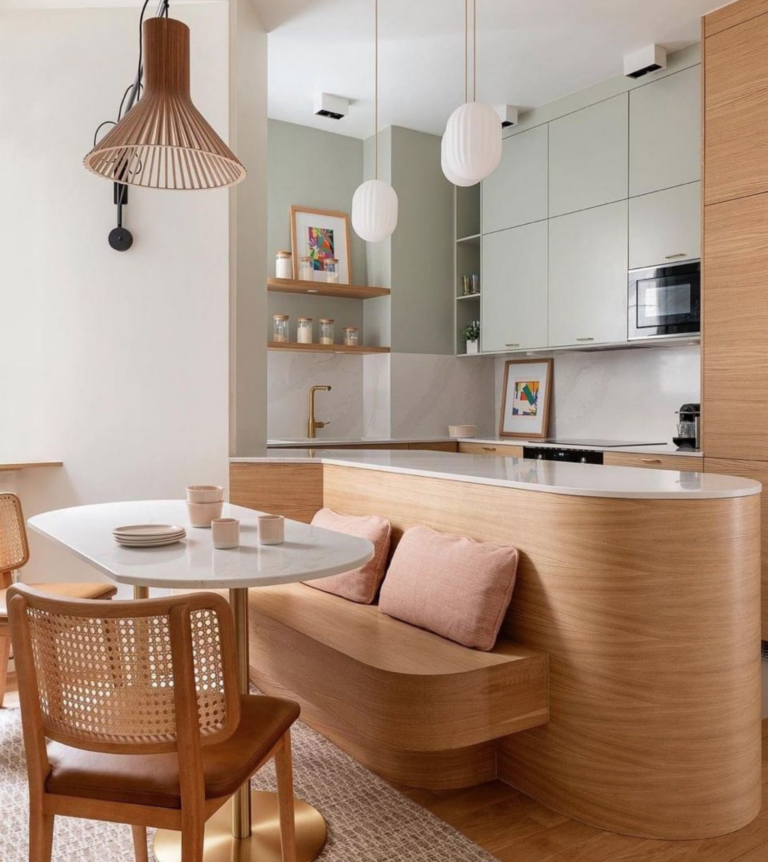
Lighting is the forgotten part of decorating... until you end up with a dull living room or a kitchen that looks like an operating theatre. Too cold, too yellow, misplaced: poorly thought-out lighting can ruin the mood of a room.
And yet, good lighting changes everything. It enhances volumes, structures space and creates an enveloping atmosphere. So how do you light your home properly?
Follow the guide!
The living room: light to suit every mood.
The living room is the living room par excellence: it's the place to entertain, relax or binge-watch a TV series on a rainy Sunday. Its lighting needs to be flexible, able to switch from a cosy atmosphere to a more open light for reading or working.
👉 What are we betting on?
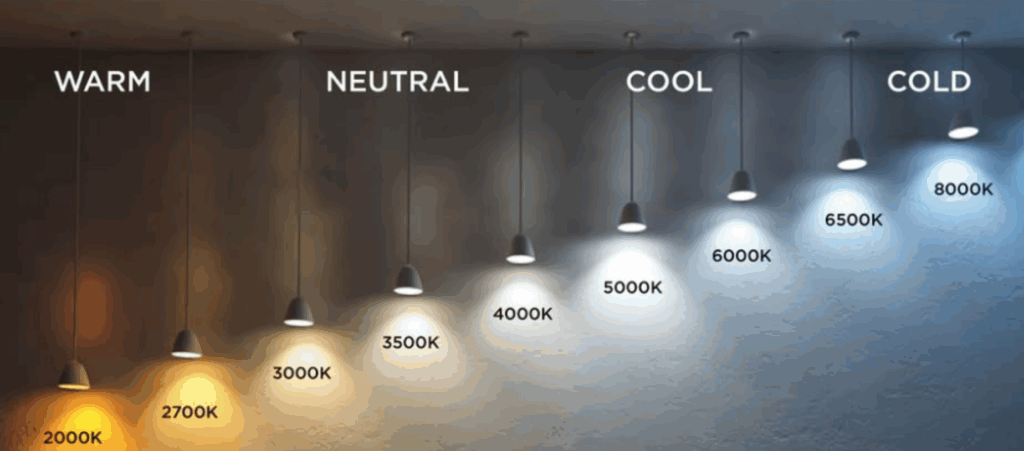
A suspension or ceiling lamp in warm light (2700K-3000K) for a soft, even base.
Spotlights (floor lamps, wall sconces, LED garlands) for warm, indirect light.
An articulated reading light next to the sofa for reading without straining your eyes.
A dimmer to adapt the intensity to the mood.
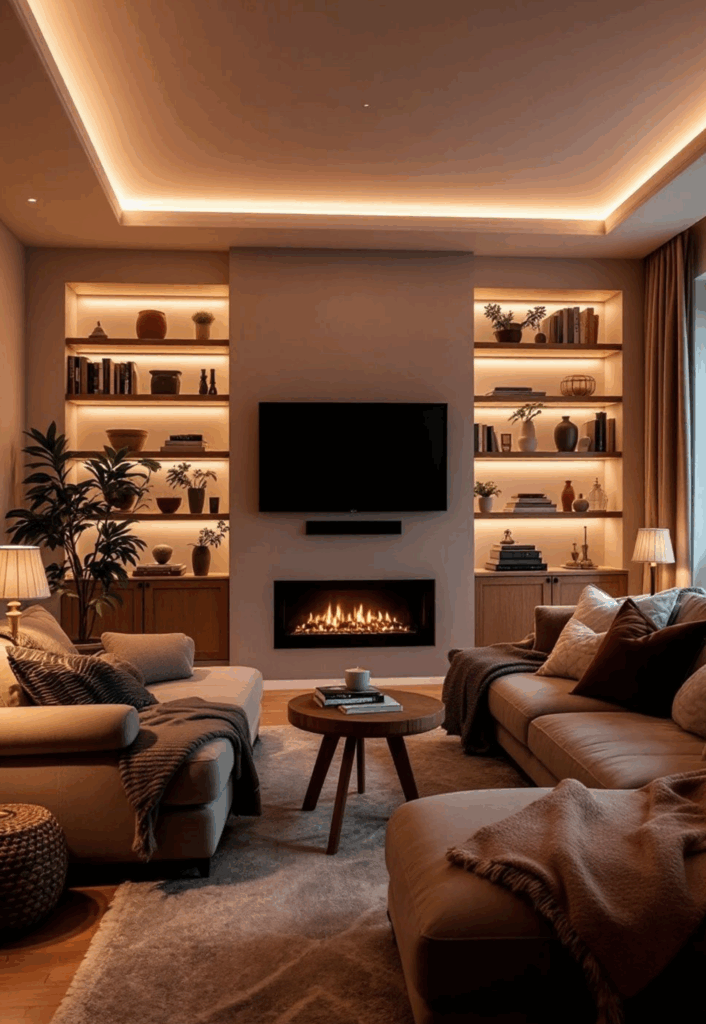
✨ The little extra: slip LED ribbons behind a TV stand for an ultra-modern effect and soft evening light.
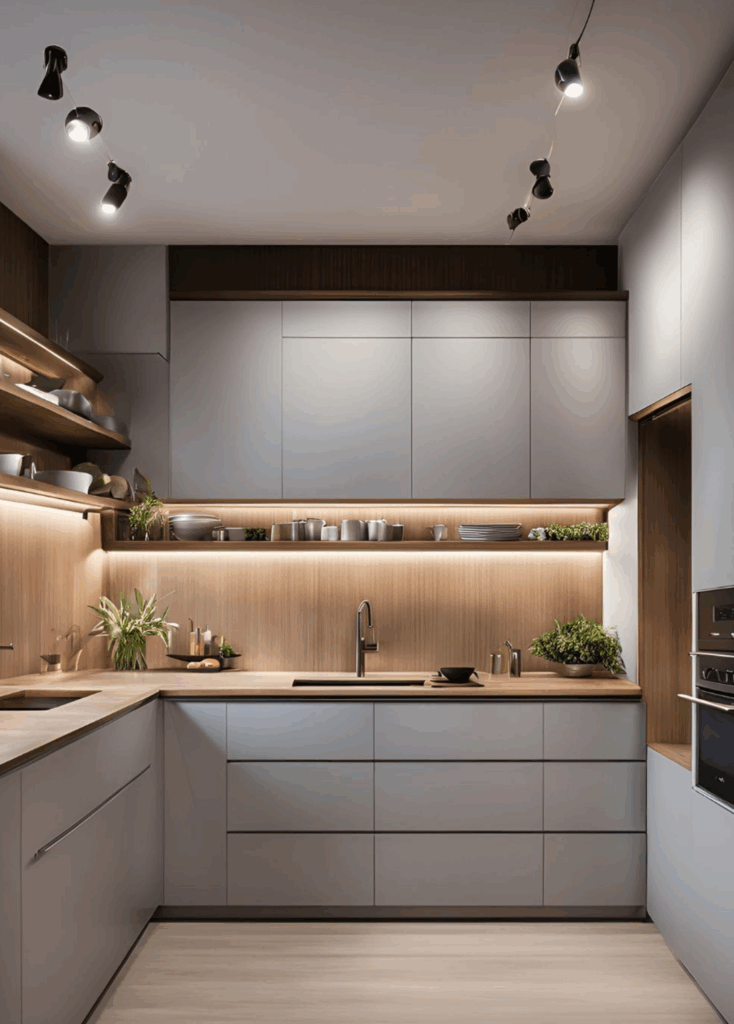
The kitchen: lighting that doesn't cheat.
Here, you want to see what you're doing. A poorly lit work surface means you're guaranteed to cut your finger slicing vegetables.
👉 The perfect light?
A powerful ceiling light or recessed spotlights in neutral light (3000K-4000K).
LED strips under tall units, towards the worktop, to avoid shadows.
Suspended above the island or bar, to add style without losing functionality.
❌ To avoid: lights that are too yellow and distort the perception of food colors.
The dining room: enhancing the table without dazzling.
Here, the lighting must highlight the plates and make you want to linger at the table. Too dim, and the atmosphere is deadened. Too bright and it kills the subdued effect of dinner.
👉 What do we do?
A suspension system well positioned above the table (at a height of 75-90 cm).
Adjustable lighting for a convivial dinner or a subdued atmosphere.
Wall sconces for an indirect touch.
✨ The little extra: a designer suspension in brass, smoked glass or cane for an immediate wow effect.
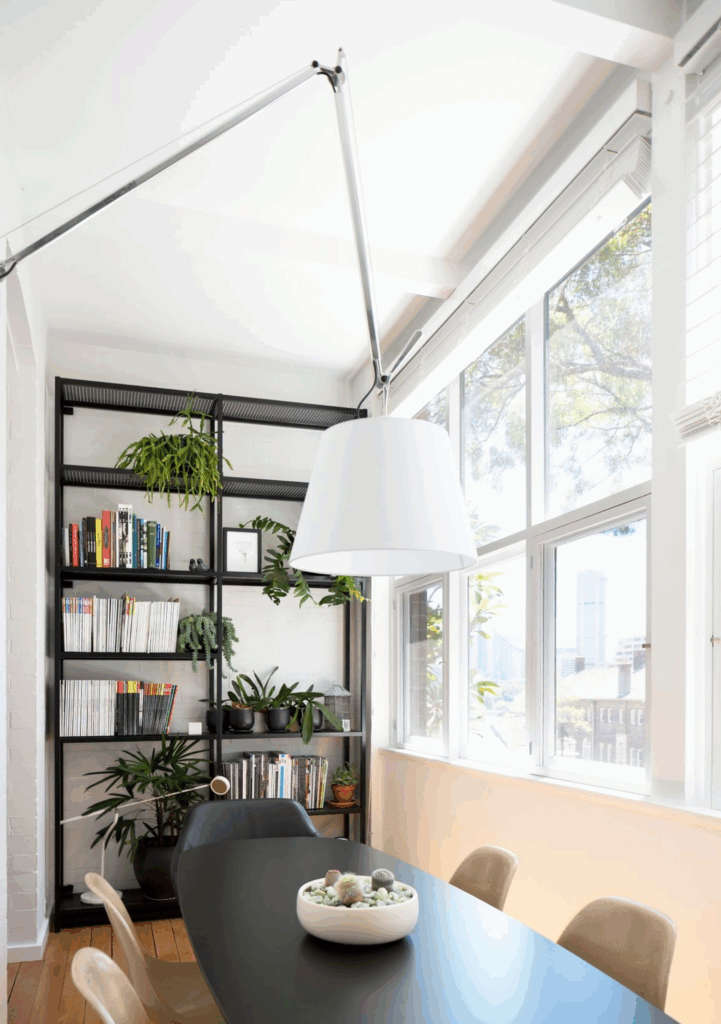
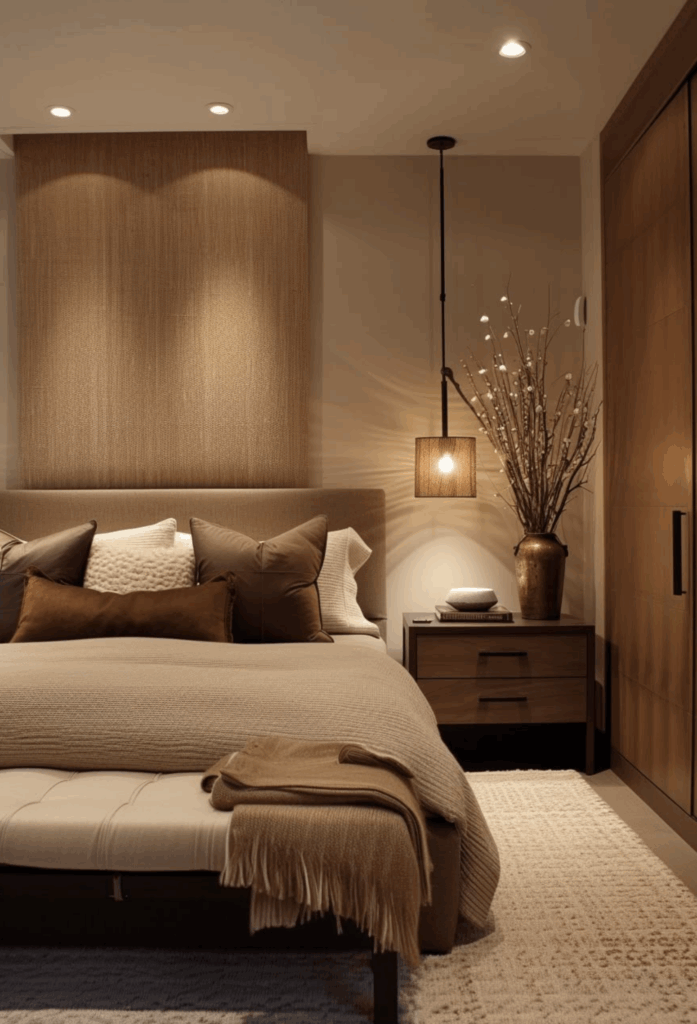
The bedroom: softness and cocooning above all.
Here, we want restful, enveloping light , conducive to letting go.
👉 Must-haves:
A discreet ceiling light or a light pendant, in warm light (2700K).
Suitable bedside lamps with dimmable bulbs.
Soft lighting in the dressing room (recessed spotlights or LEDs).
✨ The little extra: a swiveling wall light on either side of the bed, much more chic than the classic bedside lamp.
The bathroom: technical, but not clinical.
Lighting should be precise without being aggressive, to avoid the neon effect of waking up in a supermarket.
👉 Preference is given to:
Recessed ceiling spotlights in neutral light (4000K).
Lighting around the mirror, without cast shadows (sconces or integrated LEDs).
A little mood lighting, like a spotlight directed at a stone wall or bathtub.
✨ The little extra: check that luminaires have a protection rating suitable for wet areas (IP44 minimum).
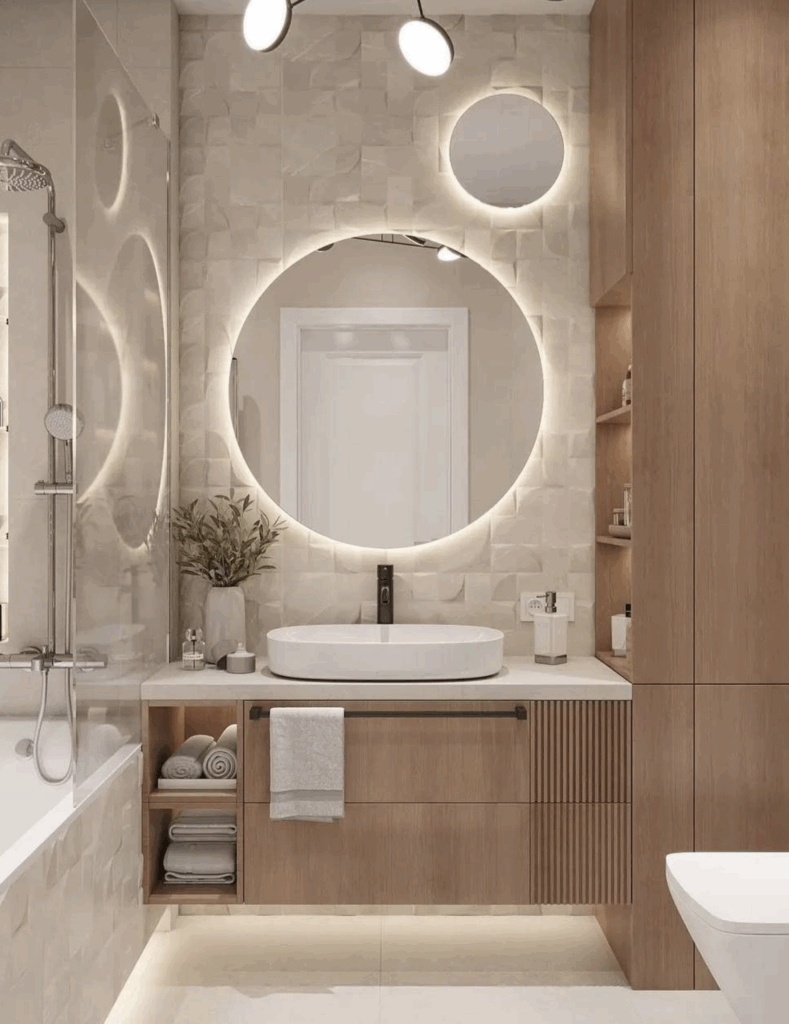

The office: dynamic, anti-fatigue lighting.
The office is where you spend hours glued to a screen. Poor lighting = fatigue + headaches.
👉 What are we betting on?
A neutral ceiling or pendant light (3500K-4000K).
A directional desk lamp, for targeted lighting without reflections on the screen.
An indirect light source, to avoid sharp contrasts.
✨ The little extra: place the lamp on the opposite side to your writing hand so as not to create an annoying shadow.
Corridors and entrances: often neglected, yet essential.
A poorly lit corridor gives the impression of a dark, narrow space. The idea? Play with light to give it relief.
👉 Good ideas:
Wall sconces for soft, directional lighting.
Recessed ceiling spotlights for even distribution.
A decorative light fixture in the entrance hall, to set the mood as soon as you cross the threshold.
✨ The little extra: LEDs on the floor or under baseboards, guaranteed design effect.
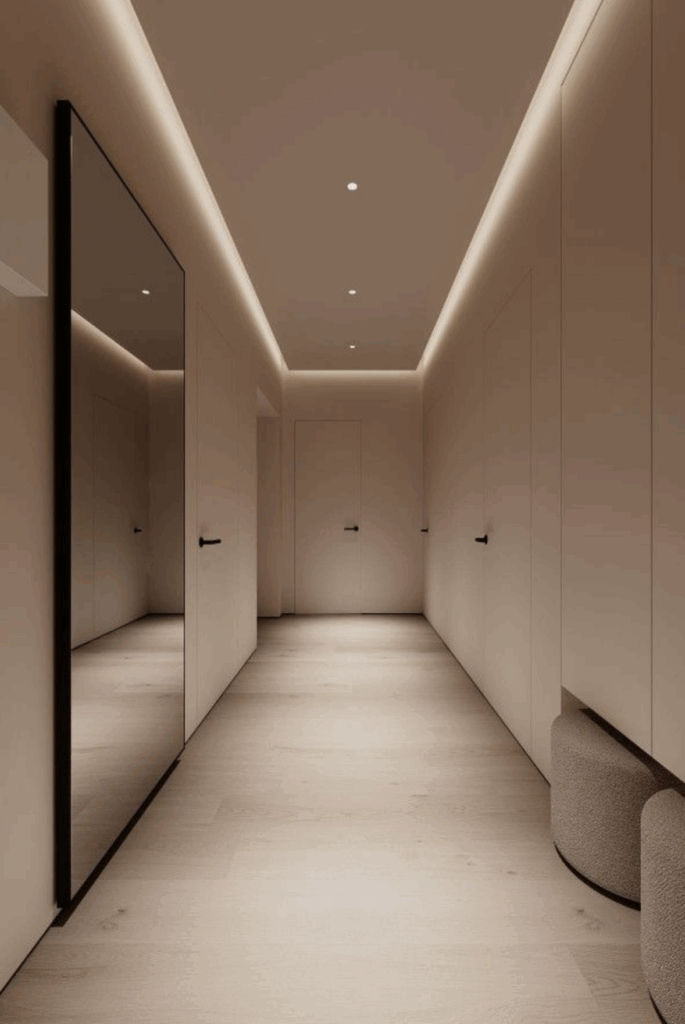
Well-thought-out lighting redesigns a space. It adds volume, sets the scene and instantly changes the mood of a room.
👉 The secret? Multiply light sources and play with intensities.
At Fredricks Interior Design, we see lighting as a key design element.