When we talk about restaurant design, we often think about decor, style and atmosphere. That's important, of course. But for me, what makes the difference between a pretty restaurant and an efficient, lively, welcoming place is movement.
A well-designed restaurant is like a choreography.
Each person - customer, waiter, chef - must be able to move through the space fluidly, smoothly, without wasting time or getting in the way.
And this choreography begins long before the first service.
A good seating plan is more than just a question of tables.
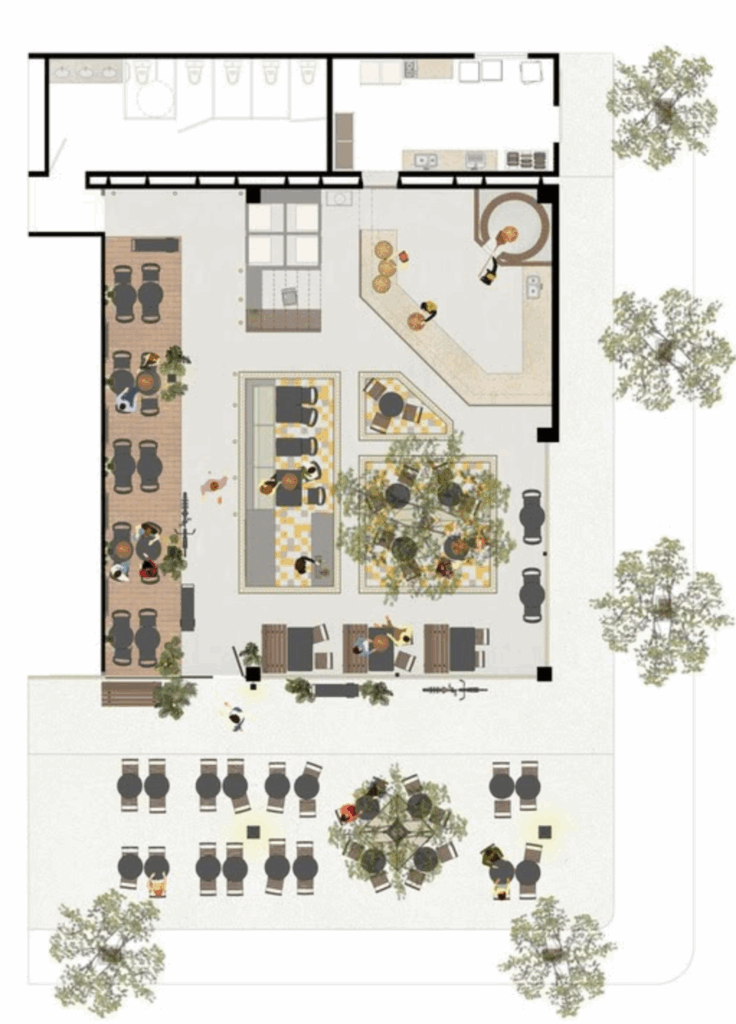
A seating plan isn't just about adding up the number of seats. It's the orchestration of a journey: that of the customer, the staff, the dishes, the view.
I always start by asking myself these questions:
Where do you enter, and what do you see first?
How do staff with trays get around?
Where are the zones of waiting, tension and slowness?
How do you create different atmospheres for different zones without compartmentalizing everything?
Each element must respond to a logic of flow - like a well-tuned theater stage.
The customer journey: a multi-stage experience
Thinking of a place as a choreography means telling a spatial story.
1. The input
This is the first impression.
It must be welcoming, clear and immediate.
A poorly thought-out airlock already creates confusion: are we being welcomed? Where do we sit? Who is visible as soon as you push open the door?
🌟 What I recommend:
An identifiable entrance, simple staging, intuitive signage.
2. Waiting or welcoming
This moment is often neglected.
The customer must be able to wait without disturbing the service, without feeling "put there", without discomfort.
A poorly placed bench or an isolated high table can be enough to structure this space.
🌟 What I recommend:
Create a visual and spatial "breathing point" before sitting.
3. Installation
Where you feel you belong.
Are you too close to others? Too exposed? Too isolated?
Seating should reflect the desired ambience: convivial? intimate? fast-paced?
🌟 What I recommend:
Alternate typologies (benches, isolated tables, group areas) to accommodate different uses.
4. The service
The ballet of the staff.
Nothing should hinder the fluidity of service: no narrow corridors, no zigzags between tables, no blockages between kitchen and dining room.
🌟 What I recommend:
Draw clear flows between nerve centers: kitchen, bar, cash desk, dining room.
5. The look
You don't look at a space, you inhabit it with your eyes.
Where do you look? On an empty wall? An open kitchen? An intricate detail?
Design must guide attention, create scenes and set the mood.
🌟 What I recommend:
Think of the visual journey as a narrative: a place of curiosity, a place of soothing, a point of tension.
It's all a question of rhythm.
As in dance and music, rhythm is fundamental:
A busy space is tiring.
A place that's too empty is disorientating.
A room without tempo makes for a flat experience.
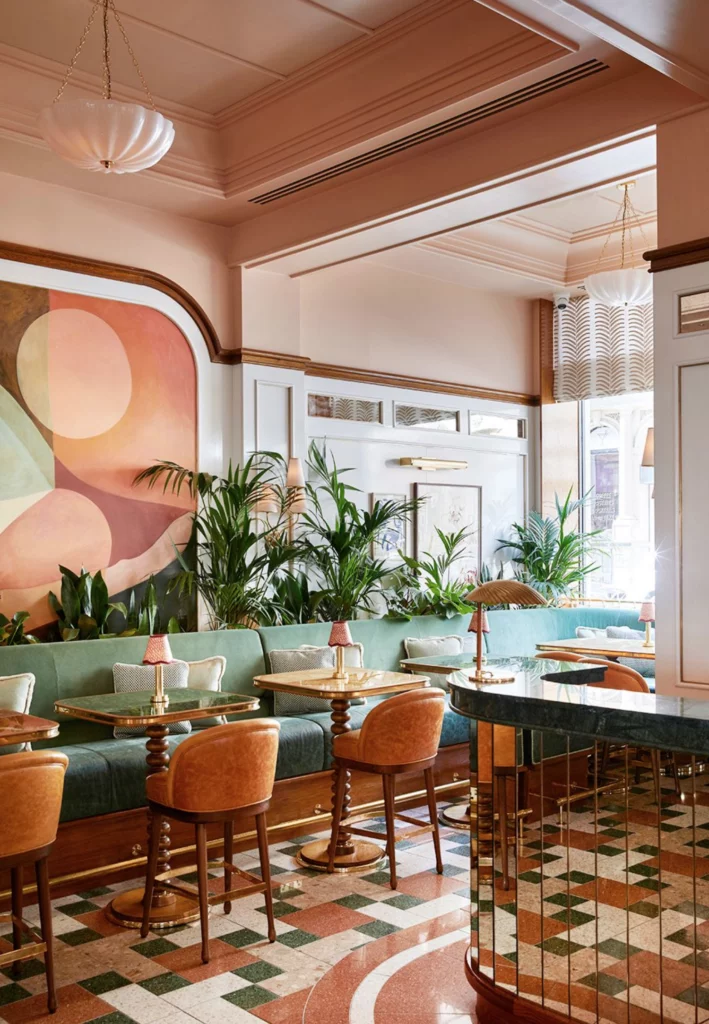
A good layout plays on :
Furniture heights
Breathing zones
Light contrasts
Absorbent or reverberant materials
Visual and sound transitions
My approach: between ergonomics, emotion and efficiency
With a background in hospitality and interior design, I've learned to think of each place as a complete experience:
A space where you feel welcomed, understood and respected.
A space where the team works better - and more serenely.
A space that tells a story, even without words.
In conclusion: dancing without stumbling
A good restaurant is more than just a beautiful dining room.
It's a fluid setting, a sequence of natural gestures, an invisible but essential choreography.
Do you have a project?
I'll help you make your place dance: for your customers, your team, and your vision.