Telecommuting, hybrid working, shared workstations, the need for concentration and creativity...
The world of work is changing, and our offices can no longer remain static.
Today, more and more companies are switching to the flex office - an organizational model with no assigned workstation, where everyone chooses their own space according to their current activity.
But changing the model isn't just about removing desks and adding a barista. It's about radically rethinking the way we work and the way we live in the workplace.
As an interior designer, I accompany this transition with a central question:
How do you create a place that truly adapts to the people who work there?
Flex office: what are we talking about?
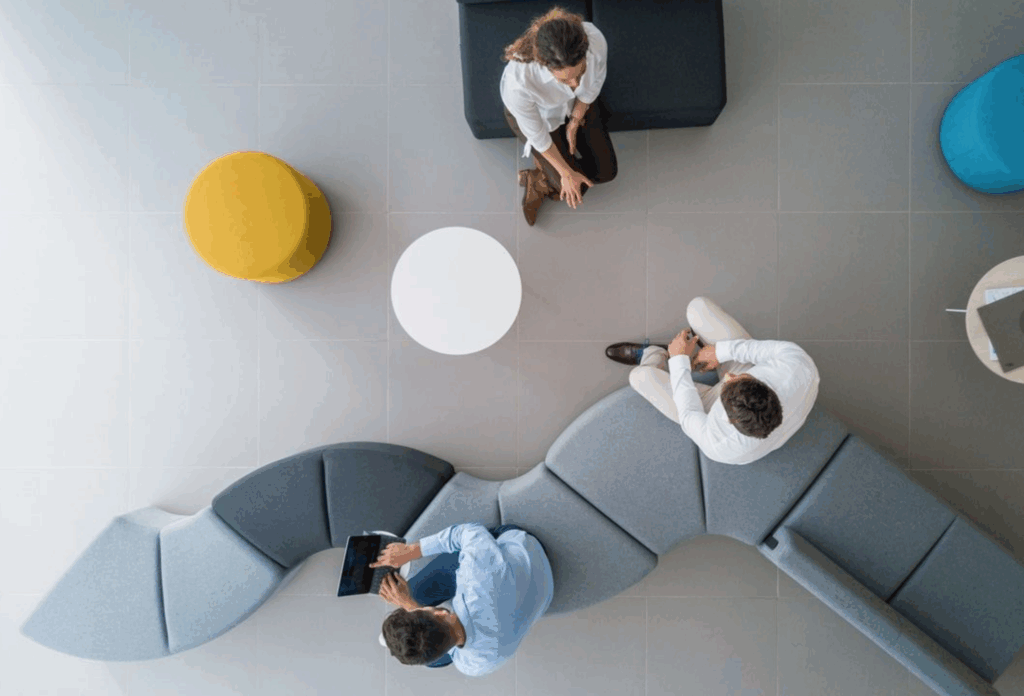
The flex office is based on a simple principle: no more fixed workstations, but differentiated spaces according to use:
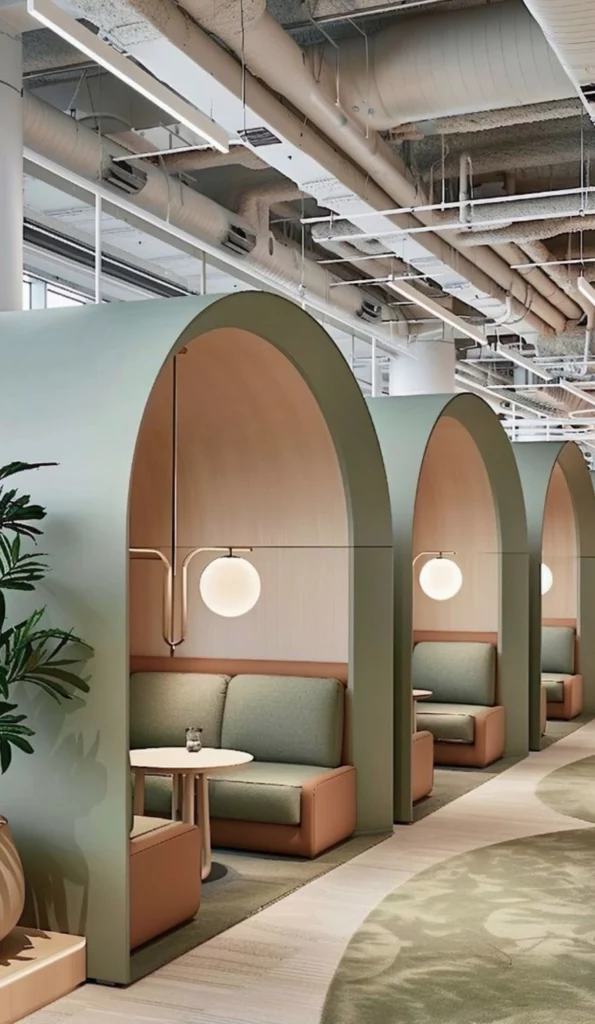
concentration bubbles
collaboration zones
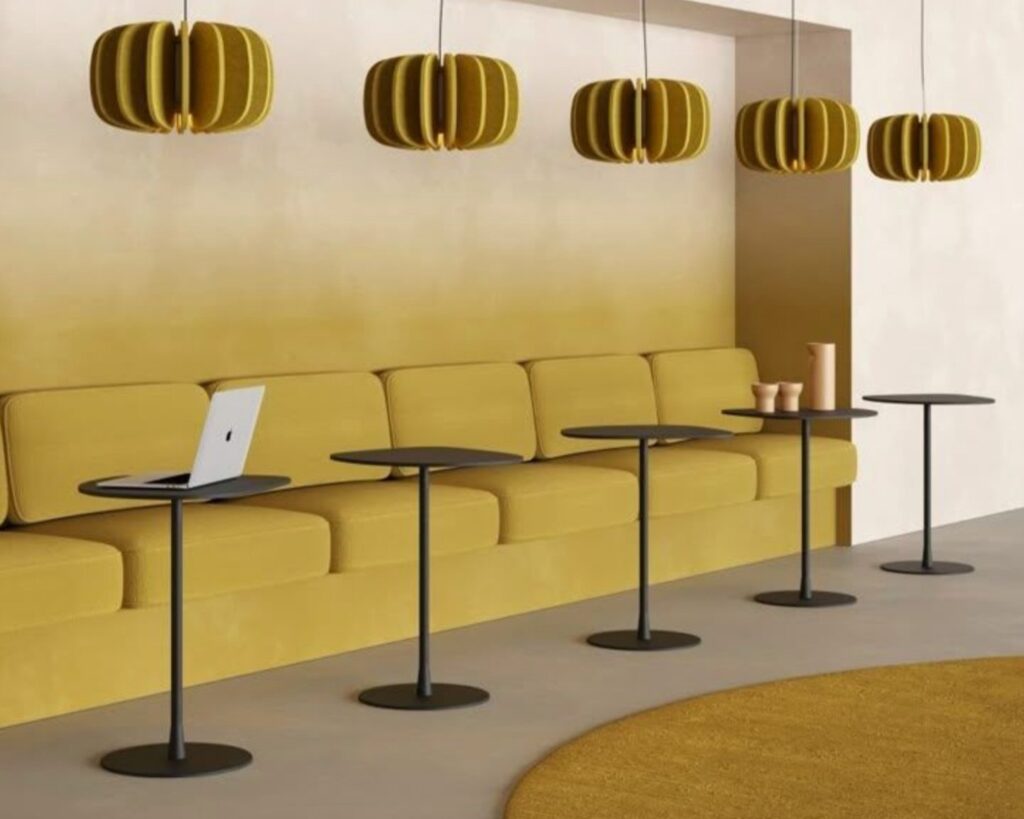
passage tables
relaxation areas
phone booths
project or creative rooms
This requires a good dose ofautonomy, trust in our teams, and a spatial environment designed as a work tool in its own right.
Common mistakes when switching to a flex office
Reducing workstations without rethinking uses
Many companies are doing away with offices without offering real alternatives. The result: wandering employees, under-utilized spaces and a loss of reference points.
Standardize all spaces
If all open spaces are the same, nothing is gained. The flex office must offer a variety of legible environments, adapted to each work rhythm.
Neglecting acoustics and privacy
This is one of the biggest obstacles: how can you concentrate without a partition? Poorly calibrated choices can turn the experience into a sonic nightmare.
Make "pretty" before making "functional"
A Pinterest-compatible space doesn't guarantee efficiency or comfort. Aesthetics must support uses, not mask them.
My approach to a successful flex office
As an interior designer, I don't just design a place. I design a scenography of work.
Here are the principles I apply:
1. Observe actual usage
Before proposing anything, I look at how the teams work today:
Where's the tension?
Who needs isolation?
Which roles require frequent exchanges?
A good space is one that is aligned with practices, not trends.
2. Create clear, differentiated zones
Each zone has a role. We don't think of a meeting table as a concentration alcove.
We need to prioritize space to help teams find their way around and choose the right environment at the right time.
3. Fine-tuning acoustics
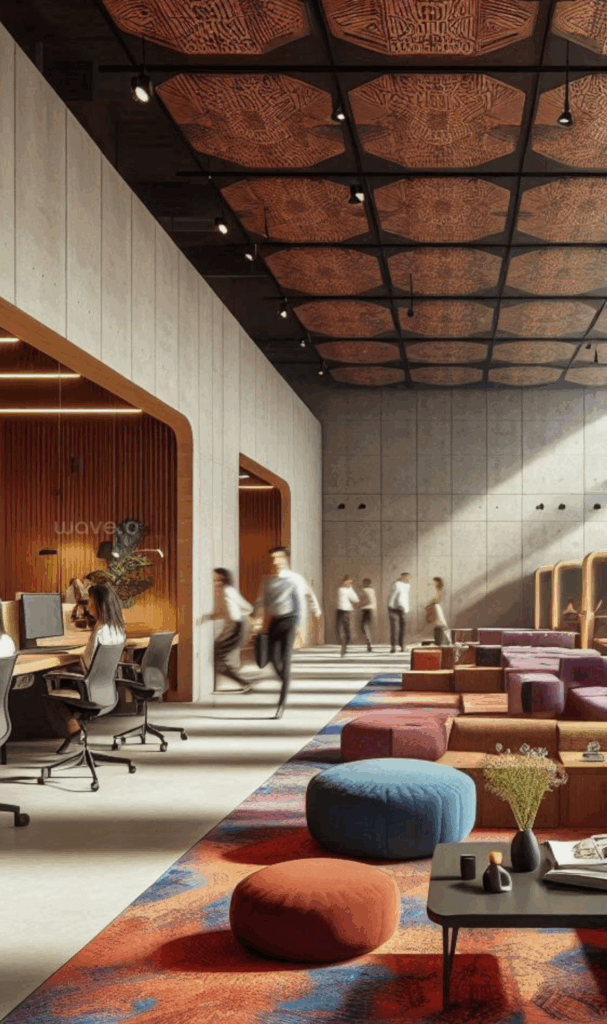
Carpets, absorbent panels, padded furniture, curtains, screens: there are a thousand ways to modulate sound without enclosing it.
The challenge is to create protected, not isolated, zones.
4. Offer a variety of environments
Diversity stimulates well-being and productivity.
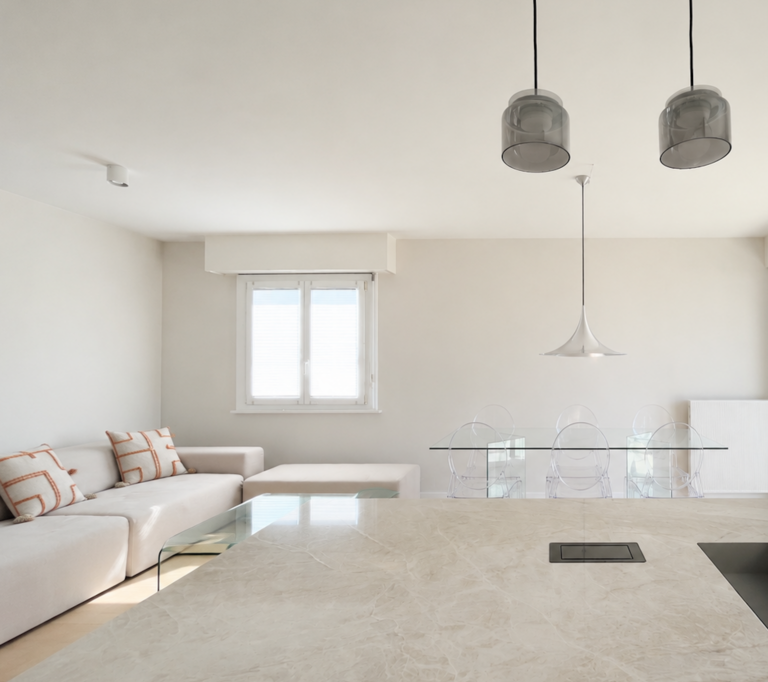
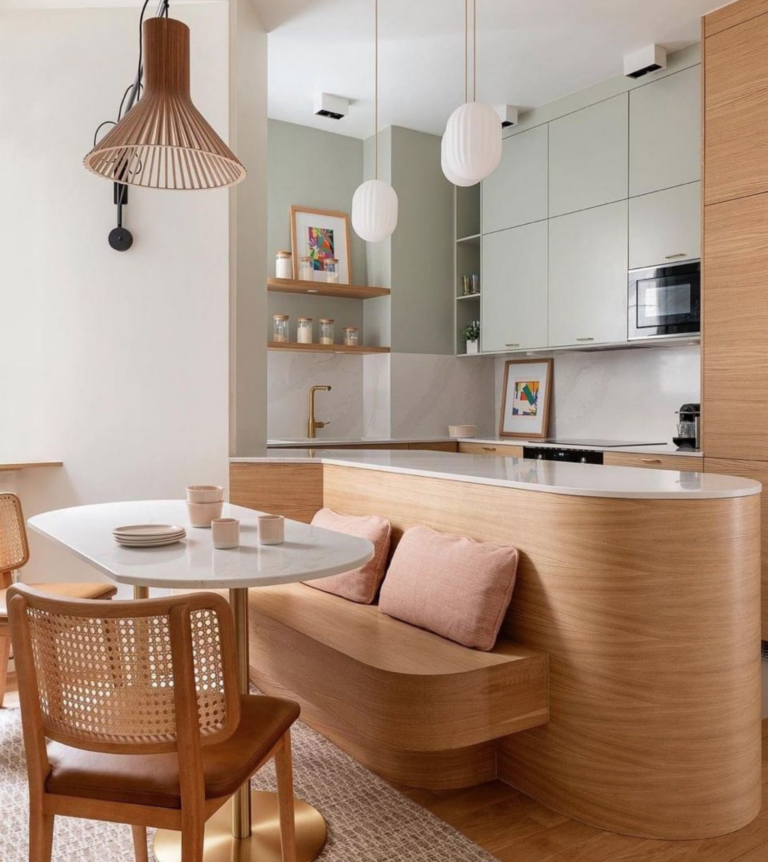
Alternate between neutral, creative, warm or more minimalist spaces - playing with light, materials, textures and colors.
5. Provide anchoring spaces despite non-attitudinal issues
Even without a fixed office, we need points of reference: a personal locker, a familiar area, a logical layout.
The mistake is to believe that total freedom is enough: human beings need rhythms and points of support.
A place to promote corporate culture.
The flex office can be a powerful tool... or an additional source of stress.
The difference lies in the quality of the spatial design and the support provided.
A well-thought-out place reconciles individual and collective needs, encourages autonomy without creating solitude, and reflects a managerial culture of trust.
It's this finesse that I bring to my projects: a balance between structure and flexibility, function and emotion, coherence and evolution.
The office will never be the same again. And that's a good thing.
But for it to become a place of resources and links, it needs to be given a new meaning.
That's what interior design is all about today:
Design intelligent spaces that respect people and support their unique way of working.
Do you have a project to reorganize or rethink your space?
I can help you design an office that breathes, brings people together, and adapts to your teams.